6916 14th St W, Bradenton, FL 34207

-
Contact Us
-
Call Us Now
-
Our Address
Rust Stain Removal Bradenton
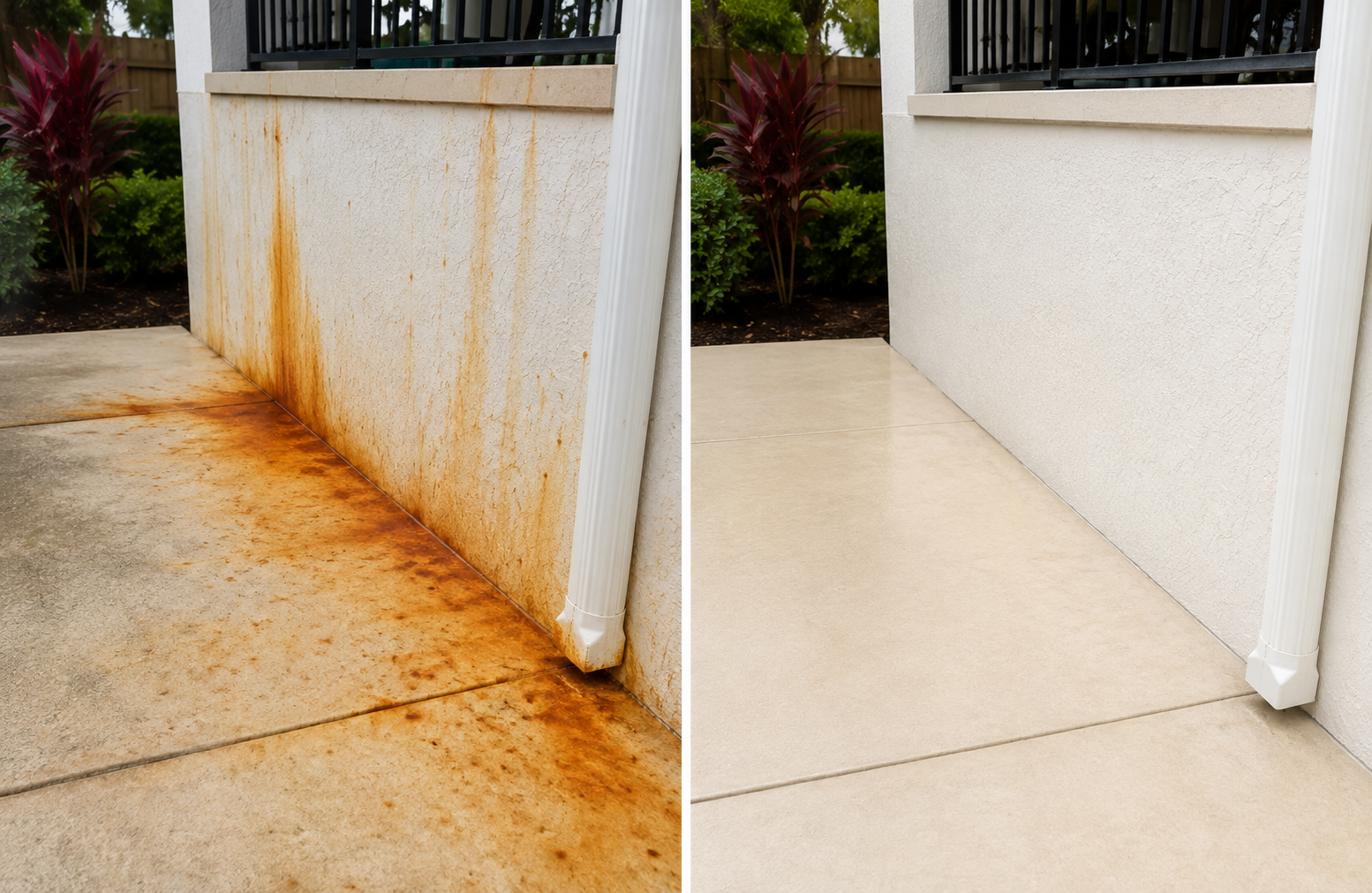
Benefits of Professional Rust Removal
- Removes orange and brown staining that standard cleaning cannot touch
- Uses chemistry matched to the surface, protecting concrete, pavers, and stucco
- Brightens the full surface for a consistent, even appearance
- Identifies rust hiding under dirt or algae during the inspection
- Gives you an honest answer on whether a stain can actually be removed
- Improves curb appeal without the cost of replacing stained material
What Causes Rust Stains in Bradenton
Well water is the most common source. Irrigation systems drawing from wells often carry dissolved iron. Every watering cycle deposits a small amount on nearby concrete, pavers, and stucco. Over time that iron oxidizes and turns orange, then brown.
Fertilizer is the second major cause. Many lawn fertilizers used in this area contain iron, and pellets that land on hard surfaces begin staining as soon as they get wet. Metal patio furniture, grills, and decorative items leave rust rings where moisture collects underneath them. Battery acid and leaking automotive fluid cause a different kind of stain. It is more concentrated and local, usually on driveways and garage floors.
Can All Rust Stains Be Removed?
Not always, and an honest answer matters more than a quick promise. Surface rust from irrigation, fertilizer, or metal furniture usually responds well to professional treatment. But some orange or brown color is actually mineral content baked into the concrete itself during manufacturing or curing. That kind of staining is part of the material, not a surface deposit, and no chemical treatment removes it.
We inspect every stain before quoting a price. If a stain is genuinely removable, we will tell you that. If it looks like embedded mineral discoloration instead, we will tell you that too, rather than charging for a treatment that will not change the result.
Surfaces We Treat
Concrete and pavers. These porous surfaces absorb rust deep into their structure, which is why treatment needs proper dwell time to work.
Travertine and natural stone. These materials need pH managed chemistry. A treatment too strong for the material can strip color or leave permanent discoloration.
Stucco. Stucco texture is easily damaged by high pressure, so rust treatment here relies on chemistry first and a gentle rinse.
Vinyl fencing and painted surfaces. These generally respond well to rust removal since the material itself is not porous, making spot treatment more realistic than on concrete.
Our Removal Process
- We inspect the stain and identify the likely cause and the surface type.
- We apply a rust specific treatment chosen for that surface.
- We allow proper dwell time so the chemistry can break the iron bond at the source.
- We rinse and evaluate the result, checking whether the stain lifted fully.
- We repeat the treatment if needed, since older or heavier stains sometimes require a second application.
Pressure alone does not remove rust. The chemistry has to do the work first, and pressure washing before that step can push the stain deeper into a porous surface instead of lifting it out.
Why We Treat the Full Surface, Not Just the Stain
Rust removers brighten concrete and pavers as they work, not just the stained area. Treating only the rust spot can leave that section noticeably cleaner than the surrounding surface, which looks worse than the original stain in some cases. On porous materials like concrete and pavers, we usually recommend treating the full surface for a consistent, even result. On non porous surfaces like vinyl or painted fencing, spot treatment is often realistic since the surrounding material is less affected by the process.
Rust Stain Removal Cost in Bradenton
Typical job cost, with a minimum charge around $250 for small areas. Price depends on surface type, area size, and how many treatments the stain needs. Every stain is different, so we do not post a flat rate online.
Get a Free Estimate: Call +1 (941) 418-1050
Recent Rust Removal Projects in Bradenton
Real photos from actual jobs carry more weight than anything we can say about ourselves.
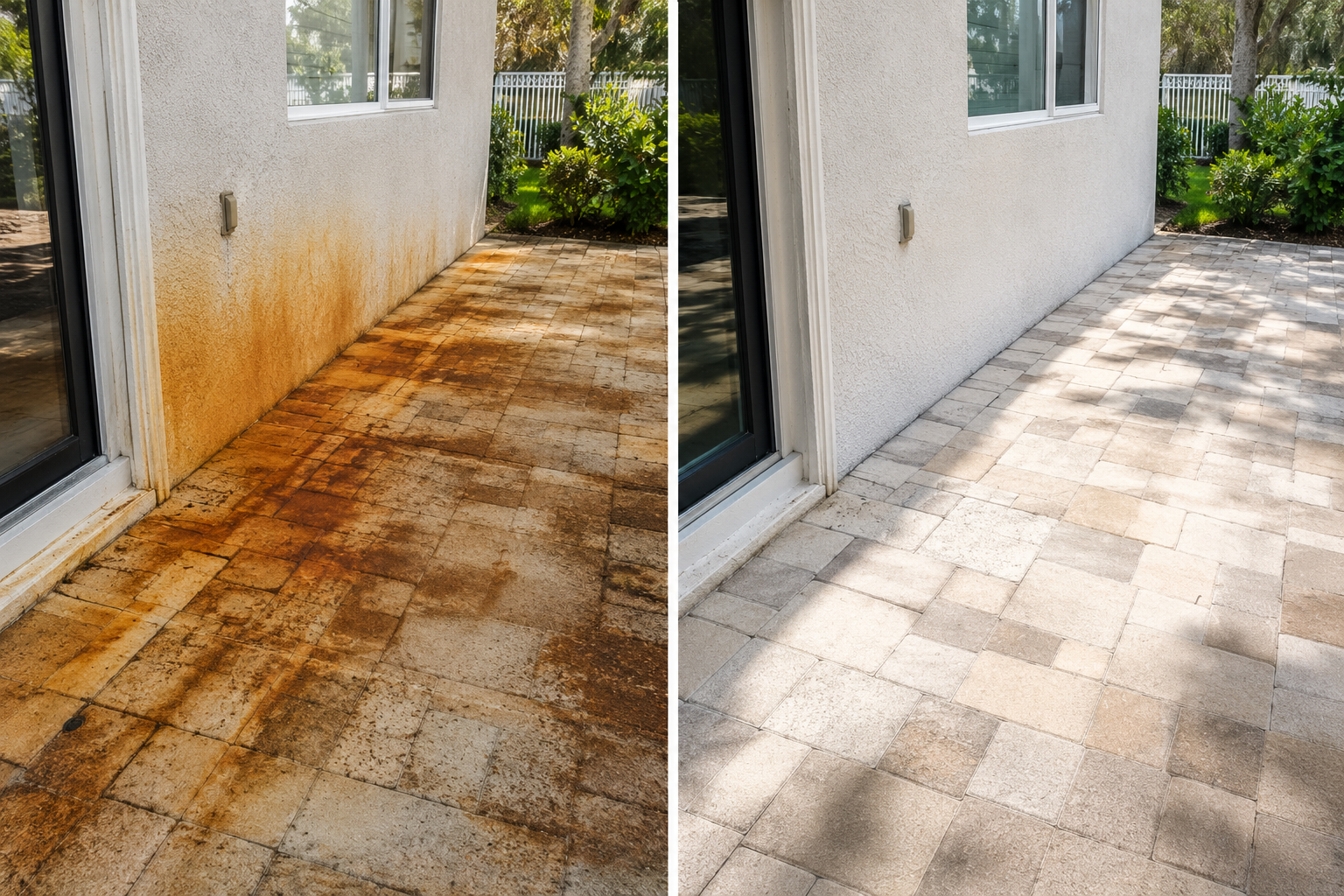
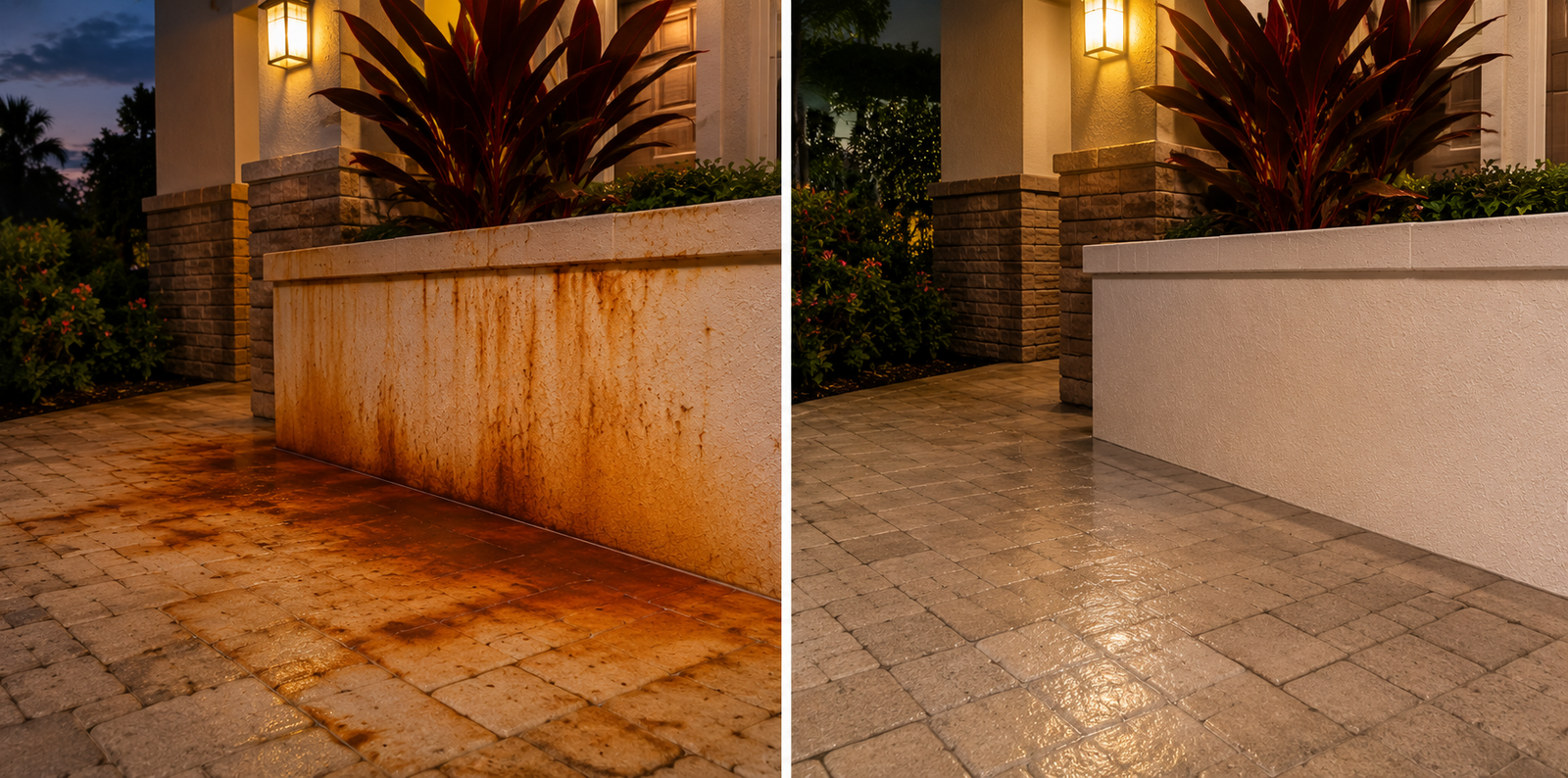
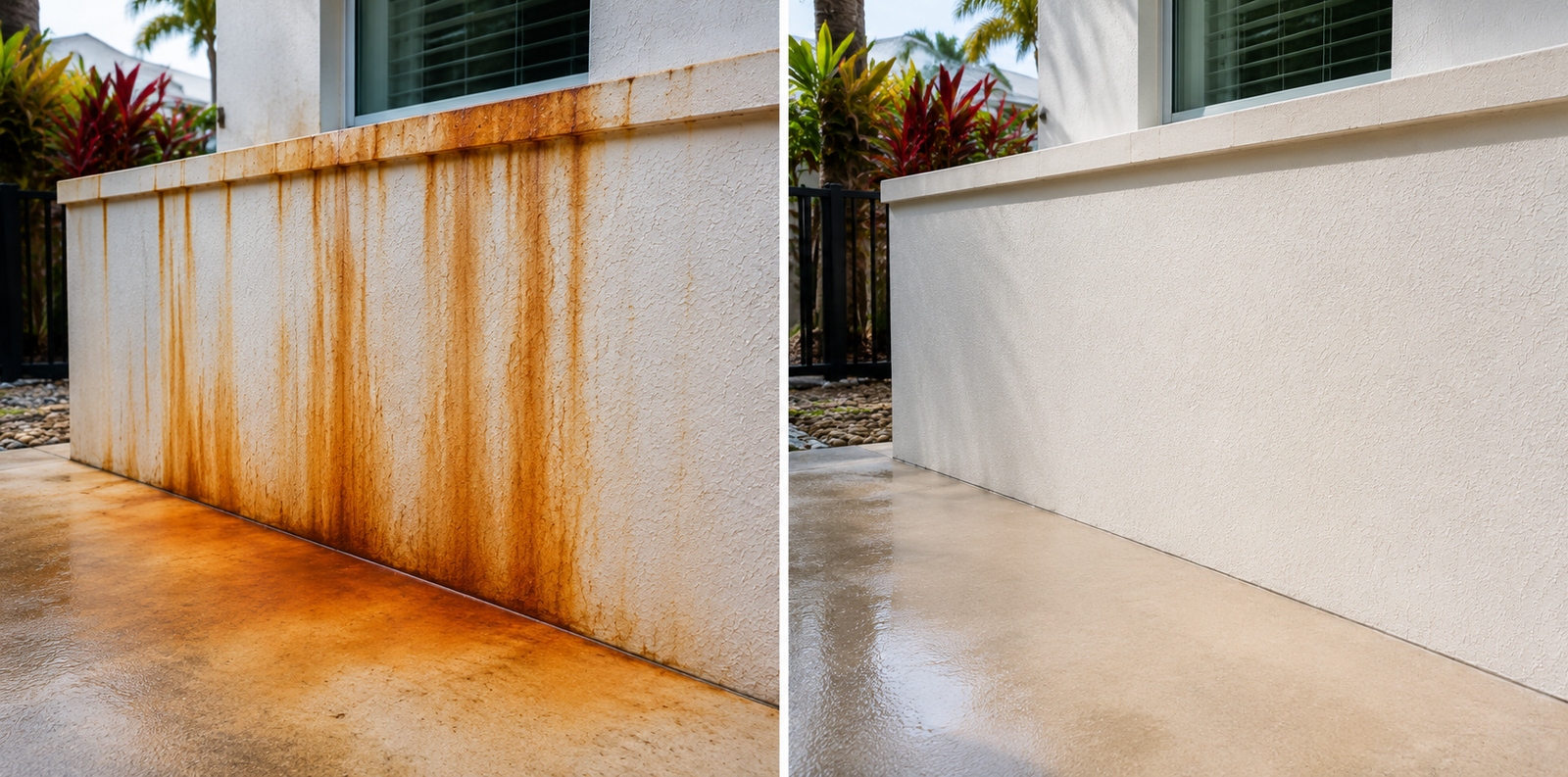
Rust Removal FAQs
How long does it take to remove rust stains?
There is no instant fix, and any product promising results in a few minutes should be viewed with some skepticism. Professional treatment needs dwell time to break down the iron bond before rinsing. Most jobs take one to three hours, and older or heavier stains sometimes need a second treatment.
How often do rust stains come back?
That depends entirely on the source. If the cause is irrigation water high in iron, staining can return within a year or two unless the water source changes. Fertilizer related stains are more one time, tied to a specific application rather than an ongoing source.
Can my HOA fine me for rust stains on my driveway?
Many Florida HOA agreements include exterior appearance standards, and a stained driveway can fall under that. Rules vary by community, so check your specific HOA guidelines. Fixing visible rust before it becomes a violation notice is usually the easier path.
Can I fix rust spots myself, or should I hire a professional?
You can try, but store bought rust removers are usually weaker than professional grade treatment. Using the wrong strength or leaving it on too long can etch or discolor concrete, pavers, and natural stone. A professional identifies the surface first and matches the chemistry and dwell time to it, which lowers the risk of making the stain, or the surface, worse.
Do I need to be home for the service?
No. As long as we can safely access the stained area, our crew can complete the work without you present. We can walk the property with you beforehand or send photos afterward.
Service Areas in Bradenton and Manatee County
We remove rust stains throughout Bradenton and Manatee County. Browse our coverage area below, or explore everything else we offer.
More Exterior Cleaning Services in Bradenton
Rust removal pairs well with other exterior care. See our paver sealing, driveway and sidewalk cleaning, and gutter cleaning services if your property needs more than rust removed.
Get a Free Estimate
Rust stains do not fade on their own, and Bradenton’s well water and fertilizer keep the cycle going. We serve Bradenton and all of Manatee County.