6916 14th St W, Bradenton, FL 34207
-
Contact Us
-
Call Us Now
-
Our Address
Driveway and Sidewalk Cleaning Bradenton
Why Bradenton Driveways Get Dirty So Fast
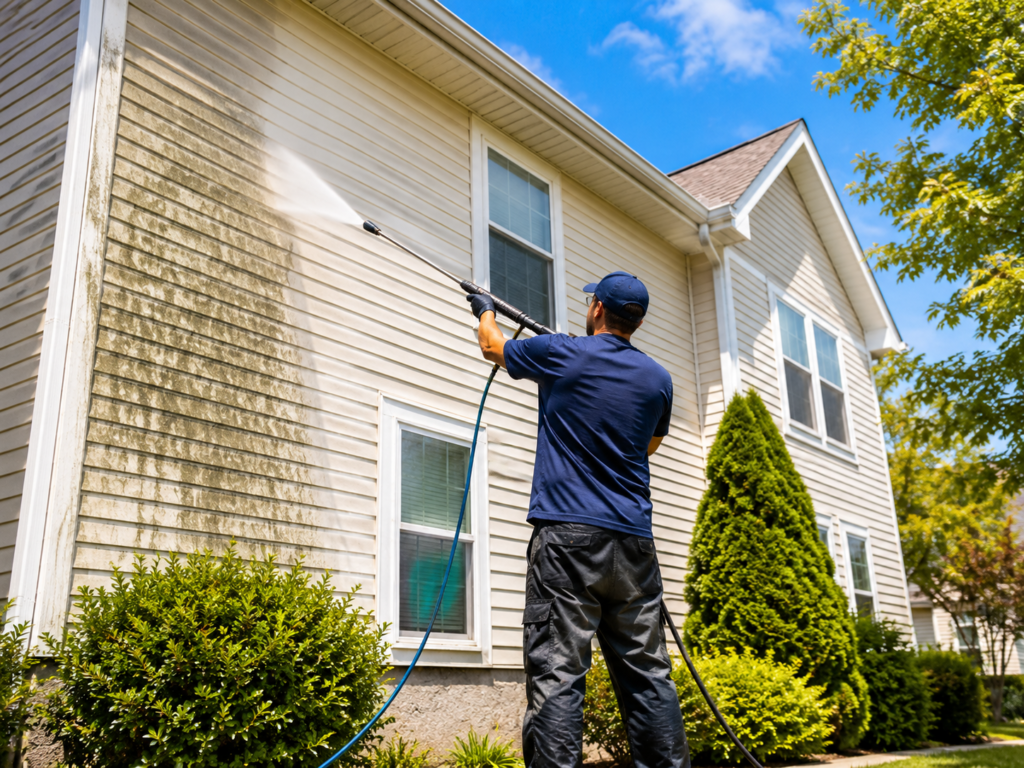
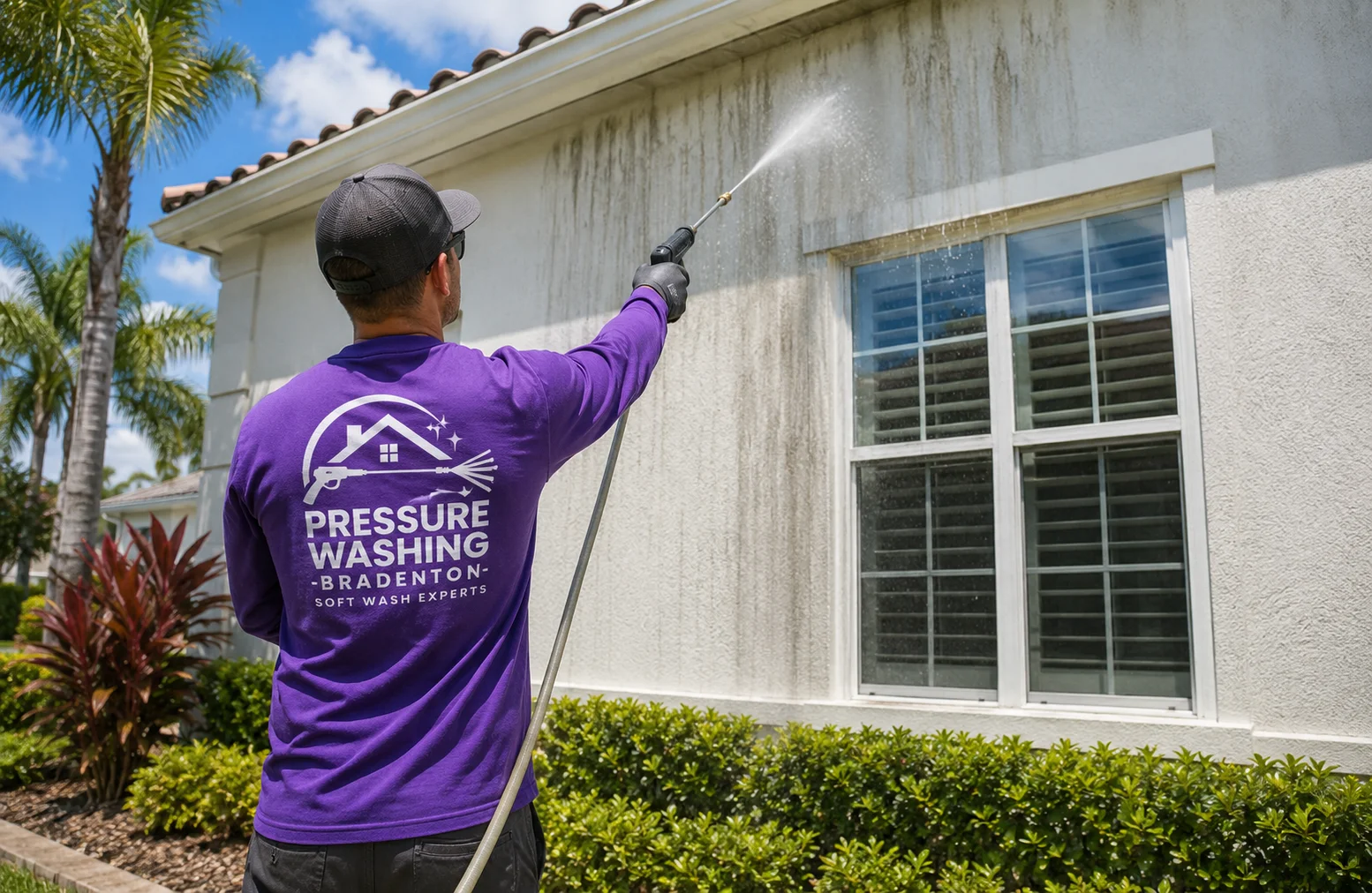
Bradenton sits on the Gulf Coast with a humid subtropical climate, and humidity stays high for much of the year. High humidity combined with warm, moist conditions is well known to encourage algae, mold, and mildew growth on outdoor surfaces, including concrete and pavers.Bradenton gets roughly 55 inches of rain a year. Combined with year round humidity, that is exactly the kind of environment where algae, mold, and mildew take hold fast on concrete and pavers.
Concrete, Paver, and Brick Driveway Cleaning We Handle
Not every driveway surface should be cleaned the same way, and the correct pressure is never a single fixed number. It depends on the surface’s age, condition, how it was originally finished or sealed, and the equipment being used.Concrete Driveways
Generally tolerates more pressure than pavers. A rotary surface cleaner distributes pressure evenly across the slab, avoiding the streak marks a handheld wand can leave behind.
Paver Driveways
Needs a more controlled approach. Pressure that is too high can dislodge sand from the joints between pavers, which weakens the surface over time.
How Professional Driveway Pressure Washing Works
Professional driveway cleaning generally follows the same steps regardless of the surface.We identify the material, the type of staining, and any cracks or loose pavers that need extra care.
Oil stains typically get a degreasing agent that needs time to break down the petroleum before washing starts. Algae and mildew are usually treated with a cleaning solution formulated to target the growth itself rather than just rinsing the surface. [Confirm here whether your products are biodegradable, eco-friendly, or a specific brand, if accurate for your business.] Rust often responds to a rust-specific treatment, since a general purpose cleaner is not effective on it.
We wash the surface with pressure matched to the material and its condition.
We complete a final walkthrough and, if requested, apply a sealer to help slow down future staining.
The overall time needed depends on the size of the driveway, the surface material, and how much buildup has set in.
Removing Oil, Rust, and Tire Marks from Your Driveway
Different stains respond to different treatments, and no single cleaner handles all of them well. Oil stains soak into concrete pores over time. A degreasing agent applied with enough dwell time lifts most oil stains, though very old or deep stains may only fade rather than fully disappear. Rust stains, often from patio furniture, sprinklers, or fertilizer, typically need a rust-specific treatment, since a standard degreaser is generally not effective on rust. Tire marks are usually rubber transfer combined with road grime. They typically respond well to standard pressure washing once the surface has been pretreated.Should You Pressure Wash Your Own Concrete Driveway?
Consumer and rental pressure washers vary widely in PSI rating, so equipment alone is not the deciding factor. What often separates a DIY result from a professional one is technique: correct nozzle selection, consistent distance and angle, adequate water flow, and pretreatment chemistry matched to the specific stain. Without these, a driveway can end up only partially cleaned, and stains can return sooner than expected. There is also a practical detail many homeowners are not fully aware of. The City of Bradenton’s stormwater ordinance prohibits discharging anything other than stormwater into the city’s drainage system, and that includes pollutants such as detergent, oil, and sediment picked up by wash water. Homeowners outside city limits should check the equivalent Manatee County stormwater rules, since requirements can differ by jurisdiction. Managing wash water responsibly is worth planning for before washing a large or heavily stained driveway on your own. Incorrect pressure or the wrong nozzle angle can also etch concrete or dislodge sand from paver joints, which can turn a simple cleaning job into a more involved repair.Protecting Your Driveway and Your HOA Standing
Many Bradenton neighborhoods are managed by homeowners associations with exterior maintenance guidelines, and a stained or algae covered driveway can be flagged during routine inspections in some communities. Keeping a driveway clean is a straightforward way to stay ahead of those standards. A clean driveway also contributes to a property’s overall curb appeal, which matters whether you are maintaining your home or preparing to sell. Beyond appearance, regularly removing algae and organic buildup is a reasonable part of routine surface maintenance for concrete and pavers, since trapped moisture and organic growth are generally considered contributing factors in long term surface wear.Driveway Cleaning Cost and Timing in Bradenton, FL
The cost of driveway cleaning depends on square footage, surface type, and how much staining has built up. Paver driveways that also need sealing typically cost more than a standard concrete wash. The time needed depends on the same factors: size, surface type, and the condition of the driveway going in. Larger, heavily shaded, or long neglected driveways generally take longer than a routine cleaning. Since square footage and staining severity vary from property to property, the most accurate way to get a price and timeline for your driveway is a free estimate.Driveway Maintenance: How Often Should You Clean It?
How often a driveway needs cleaning depends on sun exposure, drainage, shade, and how close it sits to sprinklers, trees, or standing water. Driveways in full sun with good drainage generally need less frequent attention than shaded driveways or ones near irrigation heads. Waiting too long between cleanings can let algae and mold work deeper into the surface, which may mean a longer pretreatment time or an additional pass to fully remove it later. If you are not sure how often your driveway needs attention, get a free estimate and we can recommend a schedule based on your property.Frequently Asked Questions
What is the easiest way to clean a driveway?
For most driveways, professional pressure washing is the fastest way to get a complete, even clean, since a rotary surface cleaner can cover the whole surface in a controlled pass. For light dirt between professional visits, a garden hose and stiff broom can help, but they will not remove algae or set in stains.
How do I make my concrete driveway look new again?
Pressure washing removes buildup that a hose cannot reach, which restores most of the driveway’s original color and texture. Adding a sealer afterward can help lock in that clean look and slow down future staining, which is especially relevant in a humid climate like Bradenton’s.
How long does driveway pressure washing take?
Timing depends on the size of the driveway, the surface material, and how much staining has built up. Requesting a free estimate is the most reliable way to get an accurate timeframe for your property.
How do you clean a very dirty driveway?
Heavily stained driveways usually need a longer pretreatment dwell time and sometimes a second wash pass, since years of buildup can work into the pores of the concrete. This is often where a rental washer falls short, since it may lack both the pressure and the correct chemistry for the job.
Can I pressure wash my own concrete driveway?
You can, but results are often limited without the right technique, equipment, and pretreatment chemistry. PSI rating alone does not guarantee a good result, and incorrect technique can damage the surface. Many homeowners get a more consistent result by hiring a professional, especially for larger or heavily stained driveways.
What do you spray on a driveway before pressure washing?
The pretreatment depends on the stain. Oil generally gets a degreasing agent, rust typically gets a rust-specific treatment, and algae or mildew is treated with a cleaning solution formulated for organic growth. Using the wrong solution on the wrong stain wastes time and often will not fully remove it.
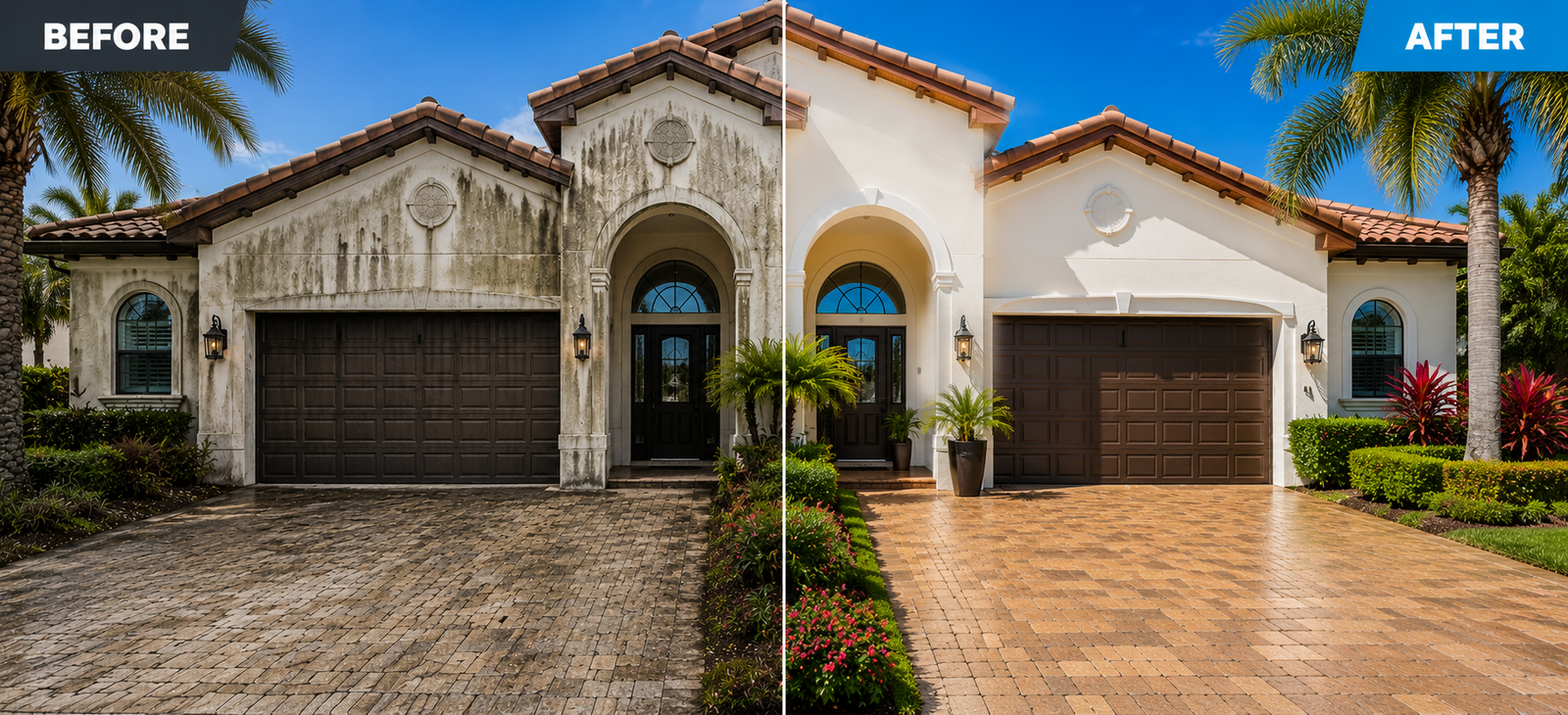
Real Results From Local Driveway Cleaning Projects
Ready for a Cleaner Driveway?
Request your free, no obligation estimate today.
Get My Free Estimate Call +1 (941) 418-1050