6916 14th St W, Bradenton, FL 34207

-
Contact Us
-
Call Us Now
-
Our Address
Paver Sealing Bradenton
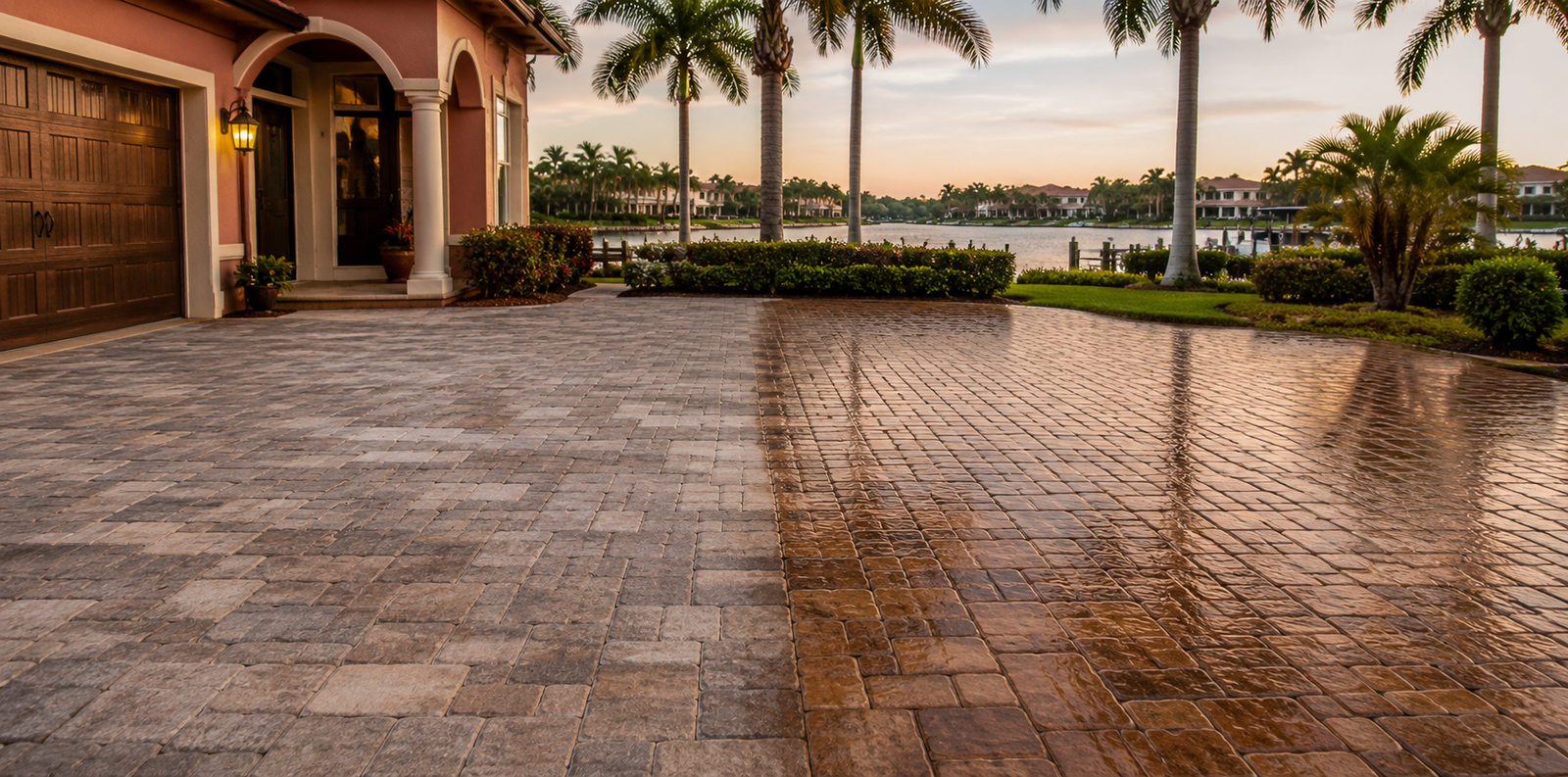
What Every Visit Includes
- Cleaning to remove dirt, algae, and old sealer residue
- Efflorescence treatment before sealing
- Joint sand replacement where needed
- Sealer applied in your choice of finish
- Before and after photos
Should Pavers Be Sealed in Florida?
Yes, for most homes. Florida sun, humidity, and heavy rain break down unsealed pavers faster than in drier climates. Sealing blocks UV fading, resists stains, and locks joint sand in place so summer storms do not wash it out. Manatee County gets both intense sun and sudden downpours, which is why local pavers tend to show wear sooner than pavers further north.
Signs Your Pavers Need Attention
- Color looks faded or dull compared to when they were installed
- Oil, rust, or other stains that will not wash off
- Algae or mold growing on the surface
- Weeds coming up through the joints
- Sand missing or washed out between the pavers
- Water no longer beads on the surface when it rains
Stains that show up mainly near downspouts are often caused by clogged gutters overflowing onto the pavers below. If that looks like the cause, our gutter cleaning service is worth checking first.
Materials and Surfaces We Seal
We seal concrete pavers, brick pavers, travertine, and natural stone. Each material takes sealer differently, so we match the product to what you have.
We work on driveways, patios, pool decks, walkways, and lanais, matching the finish to how each surface gets used.
Our Sealing Process
- We inspect your pavers and check for efflorescence, cracks, or shifting before starting.
- We clean the surface and joints to remove dirt, algae, and old sand.
- We treat any efflorescence so it does not get trapped under the new sealer.
- We replace lost joint sand. Polymeric sand gets activated with water, and standard sand is swept in dry and locked by the sealer.
- We apply the sealer in your choice of finish, natural or wet look, and let it cure fully before you use the surface again.
Some contractors treat wet sanding or dry sanding as the only correct method. The right choice depends on the sand, not personal preference, and we tell you which one we are using and why.
New Pavers? Wait Before You Seal
Fresh pavers need time to cure and release natural salts before sealing. Paver manufacturers such as Unilock recommend waiting 30 to 90 days after installation. Sealing too soon traps that white, chalky film under the coating for good. If your pavers are new, ask us for a timeline instead of rushing the job.
Is There a Downside to Sealing Pavers?
A high gloss wet look sealer can get slippery when wet, which matters most on a pool deck or lanai. A natural finish sealer avoids this and still protects the surface. Sealing will not fix cracked, sunken, or heaving pavers. If your pavers have that kind of damage, we tell you before we start, since sealing alone will not solve it.
Paver Sealing Cost
Price depends on the size of the area, the paver material, and how much repair or joint sand replacement is needed. Every property is different, so we do not post a flat rate online.
Get a Free Estimate
Call +1 (941) 418-1050
Recent Work in Bradenton
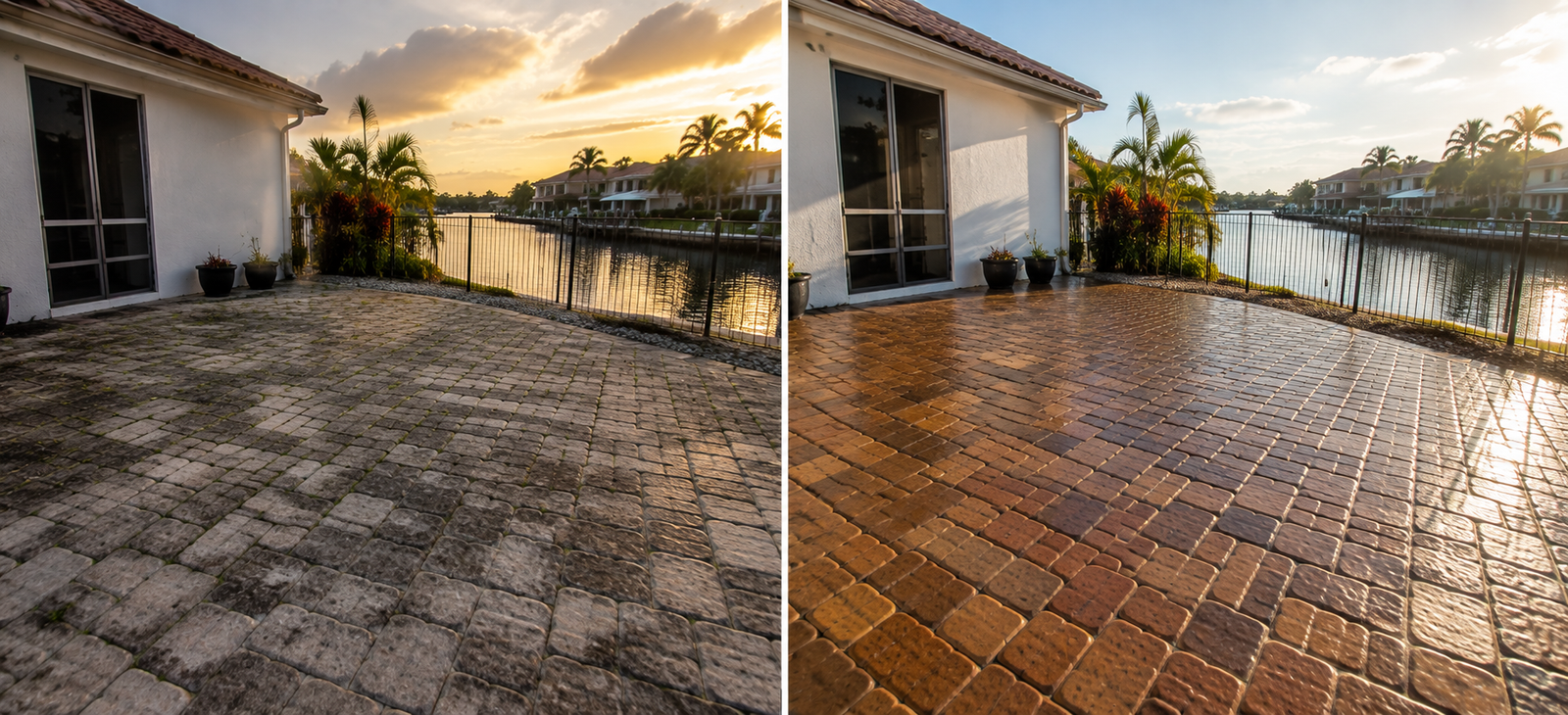
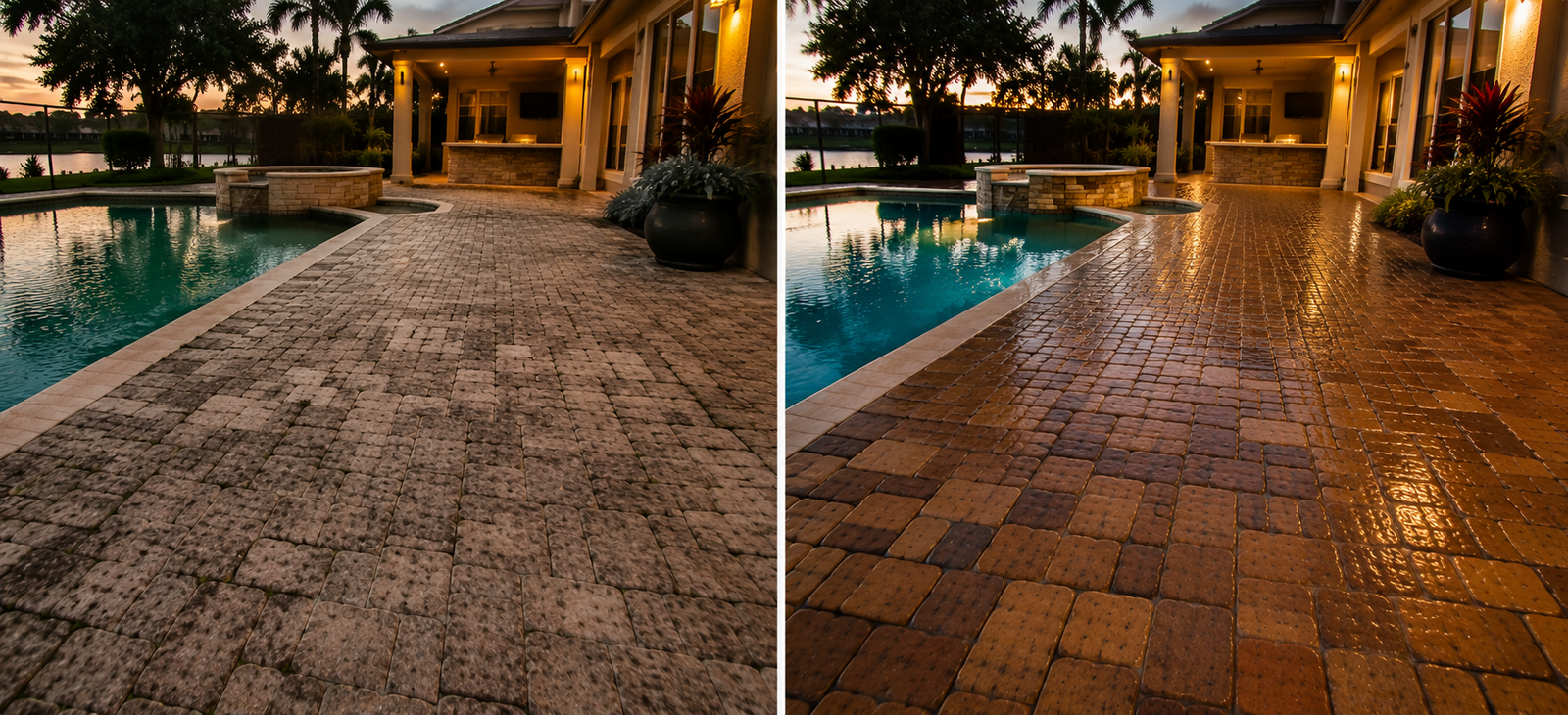
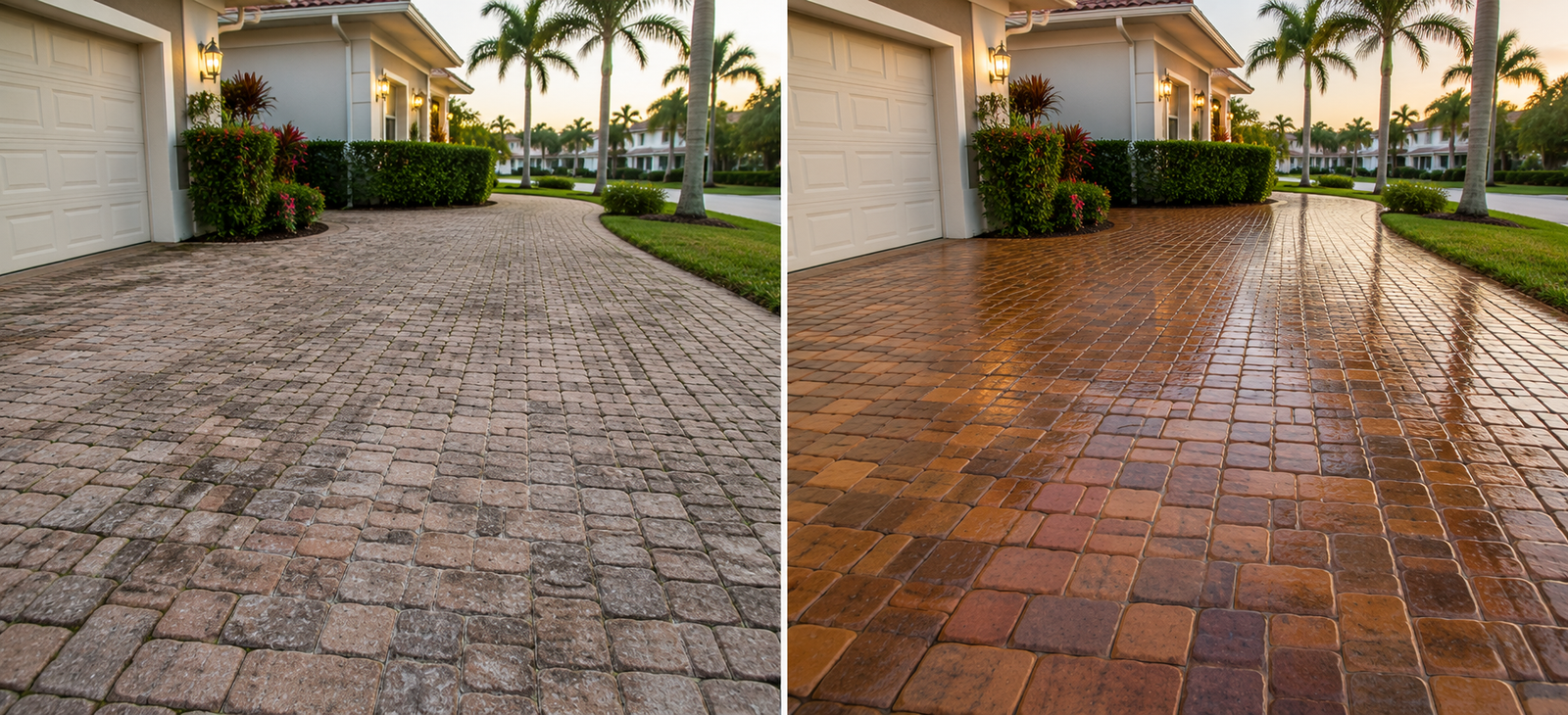
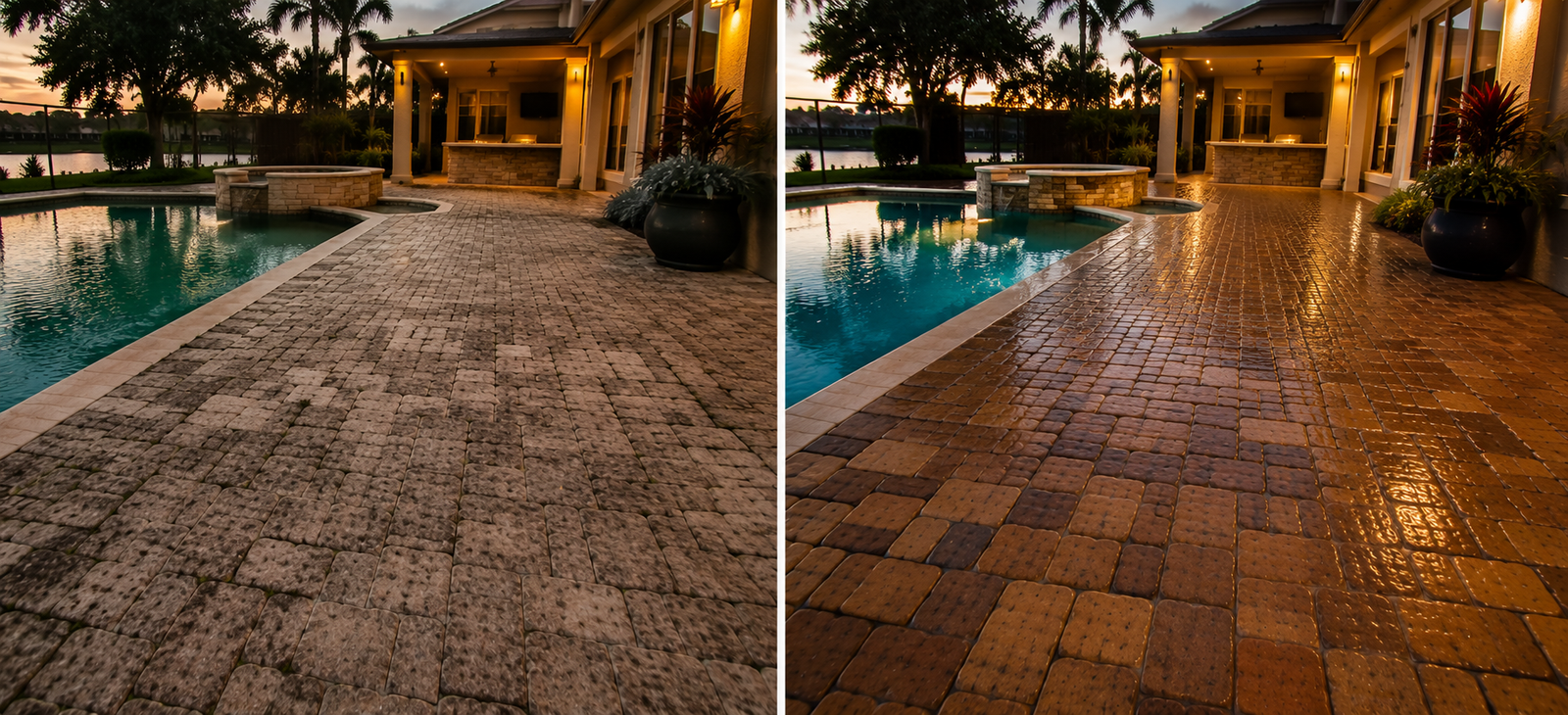
Real photos and reviews from actual jobs carry more weight than anything we can say about ourselves.
Frequently Asked Questions
How often should pavers be resealed in Florida?
Most homes need resealing every 3 to 5 years, depending on the sealer used and how much sun and foot traffic the surface gets. If rain stops beading on the surface and soaks in instead, or the color looks dull, it is time to reseal.
Is it worth sealing old or faded pavers?
Yes, in most cases. Sealing will not fix cracked or badly worn pavers, but it does restore color that years of sun have faded and stops further UV damage. Paired with cleaning and joint sand replacement first, most faded driveways and patios look close to new again.
Will sealing pavers restore their color?
Sealing enhances and brings back a paver’s existing color. It does not add new color unless you choose a tinted sealer. If pavers are badly faded or stained beyond that, a tinted sealer gives a more even look.
Can I seal my own pavers, or should I hire a professional?
DIY sealing is possible, but timing and technique matter. Sealing too early traps efflorescence, and the wrong pressure during cleaning can damage the joints. A professional also knows which sand and sealer combination fits your pavers, and can spot problems like cracks or drainage issues before sealing over them.
Complete the Job
Sealed pavers look best next to a clean house and a clear roofline. See our roof cleaning , driveway and sidewalk cleaning , and pool cage cleaning services if the rest of your property needs attention too.
Where We Provide Paver Sealing and Restoration
We seal and restore pavers throughout Bradenton and Manatee County. Browse our coverage area below, or explore everything else we offer.
Explore Our Pressure Washing Services →
- Palma Sola
- Downtown Bradenton
- Braden River
- Glenn Lakes
- Bayshore Gardens
- Village of the Arts
- Lakewood Ranch
- Sarasota
- Palmetto
- Parrish
- Ellenton
- Bradenton Beach
- Anna Maria Island
- Samoset
Get a Free Estimate
Faded, stained, or weedy pavers do not fix themselves, and Florida sun will not slow down. We serve Bradenton and all of Manatee County.