
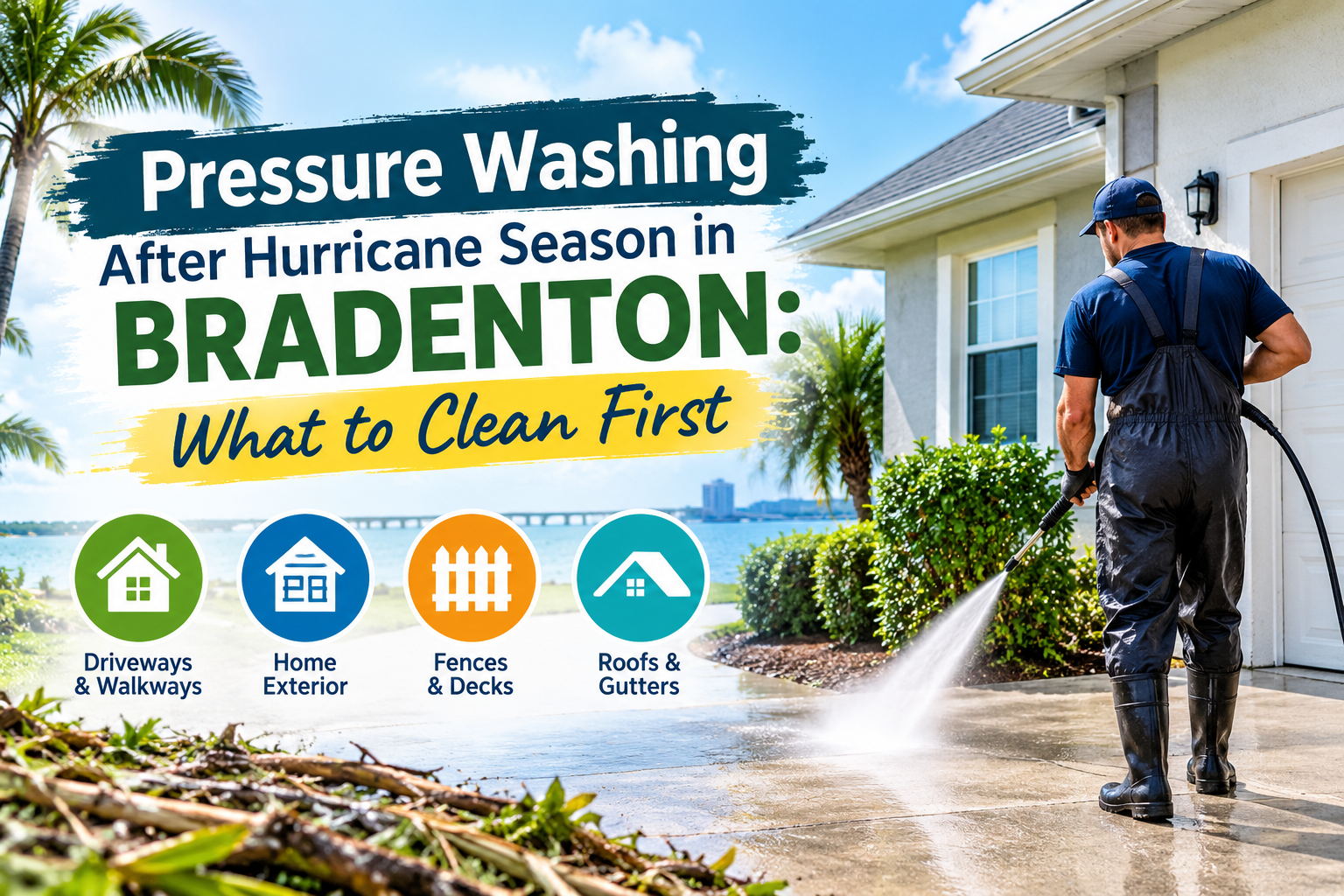
Hurricane season officially runs until November 30, but for most Bradenton homeowners the real cleanup starts once the heavy rain bands stop rolling in from the Gulf. By then, your home has spent months soaking up salt spray, wind-driven sand, pollen, leaf debris and constant humidity. Mold, mildew and algae love exactly those conditions.
The instinct is to grab a pressure washer and start with whatever looks worst, usually the driveway. That is the wrong place to start. Cleaning works with gravity: dirt, algae and debris from the roof and gutters run down onto the walls, and everything from the walls ends up on the concrete. Wash the driveway first and you will be washing it again by the weekend.
The second reason order matters is damage. Some surfaces need high pressure, some need almost none, and a few should not be pressure washed at all. Getting the sequence and the method right saves your roof, your stucco and your time.
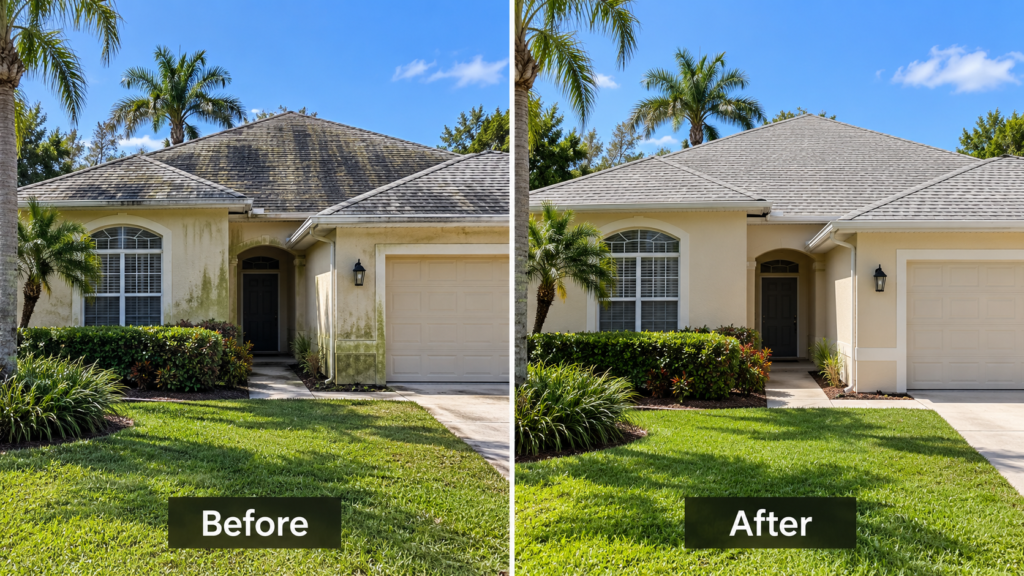
We saw this on a recent job in West Bradenton, where the homeowner had already pressure washed the driveway twice after a storm and still found it streaked with green within a week. The real problem was above it: clogged gutters and an algae-covered roof were washing debris down every time it rained. Once we soft washed the roof, cleared the gutters and then cleaned the walls and concrete in that order, the driveway stayed clean.
Step zero: a safety walk before any water touches the house
Before you clean anything, walk the whole property and look for storm damage. Water at pressure finds every weak spot, and it can turn a small problem into an expensive one.
- Roof: look for lifted or missing shingles, cracked or slipped tiles and damaged flashing. Do not wash a roof that has open damage. Get it repaired first.
- Walls and stucco: check for new hairline cracks, loose trim and gaps around windows. High-pressure water pushed into a crack goes straight behind the stucco.
- Electrical: note where the meter, outdoor outlets, pool equipment and lighting are. Keep water away from all of them.
- Downed debris: clear branches, palm fronds and loose sand by hand or with a blower. Spraying heavy debris just moves it around and can chip surfaces.
- Documentation: if you plan to file an insurance claim, photograph everything before you clean. Once it is washed, some of the evidence is gone.
If flood water entered your garage or lower level, treat that as a health issue, not a cosmetic one. Floodwater can carry sewage and chemicals, so that area needs proper sanitizing, not just a rinse.
What to clean first: the post-storm order for Bradenton homes
Work from the top down and from the house outward. Here is the order we recommend, and why.
- Roof: soft wash, never blast
Your roof takes the worst of the season. Those black streaks you see on so many Bradenton roofs are algae, and months of humidity and rain help it spread fast. Left alone, it holds moisture against the roof and shortens its life.
Roofs should be soft washed, not pressure washed. Soft washing uses low pressure and a cleaning solution that kills the algae at the root, then lets rain finish the job. High pressure strips the protective granules from asphalt shingles and can crack or dislodge tile. Most shingle manufacturers warn against pressure washing for this reason, and doing it can affect your warranty. - Gutters and downspouts
Once the roof is clean, clear the gutters. After storm season they are usually packed with leaves, granules, sand and roof runoff. Blocked gutters overflow onto your walls and foundation, which undoes the wall cleaning you are about to do.
Scoop out the debris, flush the downspouts, then clean the outside of the gutters. The gray and black “tiger stripes” on gutter faces need a gentle cleaner, not high pressure, or you will dent the aluminum. - Exterior walls, stucco and siding
Bradenton’s coastal air leaves a film of salt on every wall facing the water, and that salt holds moisture. Combine it with months of rain and you get green algae on north-facing walls, mildew in shaded corners and red clay or sand splashed up from the ground.
Stucco and painted surfaces need low pressure and the right detergent. Too much pressure etches stucco, forces water into cracks and peels paint. Vinyl siding can take a little more, but water should never be aimed upward into the seams. Rinse windows and screens gently as you go. - Lanai, pool cage and screen enclosure
Screen enclosures collect everything the wind throws at them. Salt, pollen and mildew build up on the aluminum frame and the screen mesh, and the pool deck underneath gets slippery fast.
Clean the frame and screens with low pressure so you do not tear or pop the screen out of its spline. Then clean the pool deck. If you have pavers, wash them carefully so the joint sand stays in place, and re-sand afterwards if needed. If you are not sure whether a product is pool safe, keep it out of the water. - Driveways, walkways and patios
Now it is time for the concrete. After a storm, driveways often carry a layer of silt, tire marks, rust from debris and green or black algae in the shaded spots. Those slick patches are a real fall risk, especially for older family members and kids.
Concrete is where real pressure washing earns its keep. A surface cleaner gives an even finish without the zebra stripes that a wand leaves behind. Pretreat oil and rust stains first. Push silt and runoff toward the lawn rather than the street, so it does not end up in storm drains and local waterways. - Fences, docks, decks and outdoor furniture
Finish with the extras. Wood fences and decks turn gray and green after a wet season, and docks near the water collect salt and algae on every board. Use low pressure on wood, keep the tip moving and work with the grain, or you will raise splinters. Vinyl fences and outdoor furniture clean up quickly with a mild detergent and a gentle rinse.
What not to pressure wash, and when to call a pro
A pressure washer is a powerful tool, and it causes as much damage as it fixes in the wrong hands. After storm season, skip these or leave them to a professional:
- Roofs of any kind, unless you are soft washing with the right equipment and a safe way to work at height.
- Windows, window seals and door frames, where water gets pushed inside.
- Damaged stucco, siding or trim that the storm already loosened.
- Electrical boxes, AC units, pool pumps and outdoor lighting.
- Older painted surfaces on homes built before 1978, which may contain lead paint.
DIY is fine for a small patio or some outdoor furniture. For a full post-storm clean, especially the roof, two-story walls and the screen enclosure, hiring a crew is usually safer and faster. A good company will match the method to each surface, use the right cleaning solutions, protect your plants and carry proper insurance. If you would rather hand the whole job over, our team offers professional pressure washing in Bradenton for homes across the area, from roof soft washing to driveways and docks.
When you compare companies, ask three questions: Do you soft wash roofs? Are you licensed and insured? Can I see photos of similar jobs? Clear answers to all three are a good sign.
Frequently asked questions
How soon after a hurricane should I pressure wash my house?
Wait until the storm threat has passed and you have checked for damage. Algae and mildew start growing within weeks in Bradenton’s humidity, so aim to clean within a month or two after the season winds down.
Is soft washing better than pressure washing after a storm?
It depends on the surface. Soft washing is the right choice for roofs, stucco, painted walls and screens. Pressure washing is best for hard surfaces like concrete driveways, sidewalks and pool decks.
Will pressure washing remove salt buildup from my home?
Yes. A thorough rinse with the right detergent removes salt film from walls, windows and screen enclosures. Getting it off early helps protect paint, metal frames and window seals from corrosion.
How often should Bradenton homes be pressure washed?
Most homes do well with a full exterior clean once a year, ideally after hurricane season. Waterfront homes and shaded properties may need it twice a year.
Start at the top and work your way down
After storm season, clean your Bradenton home in this order: safety check, roof, gutters, walls, lanai, concrete, then fences and docks. Use soft washing where the surface is delicate and real pressure only where it belongs. Follow that sequence and you clean each surface once, protect it from damage and get your home looking ready for Florida’s best months of the year.