
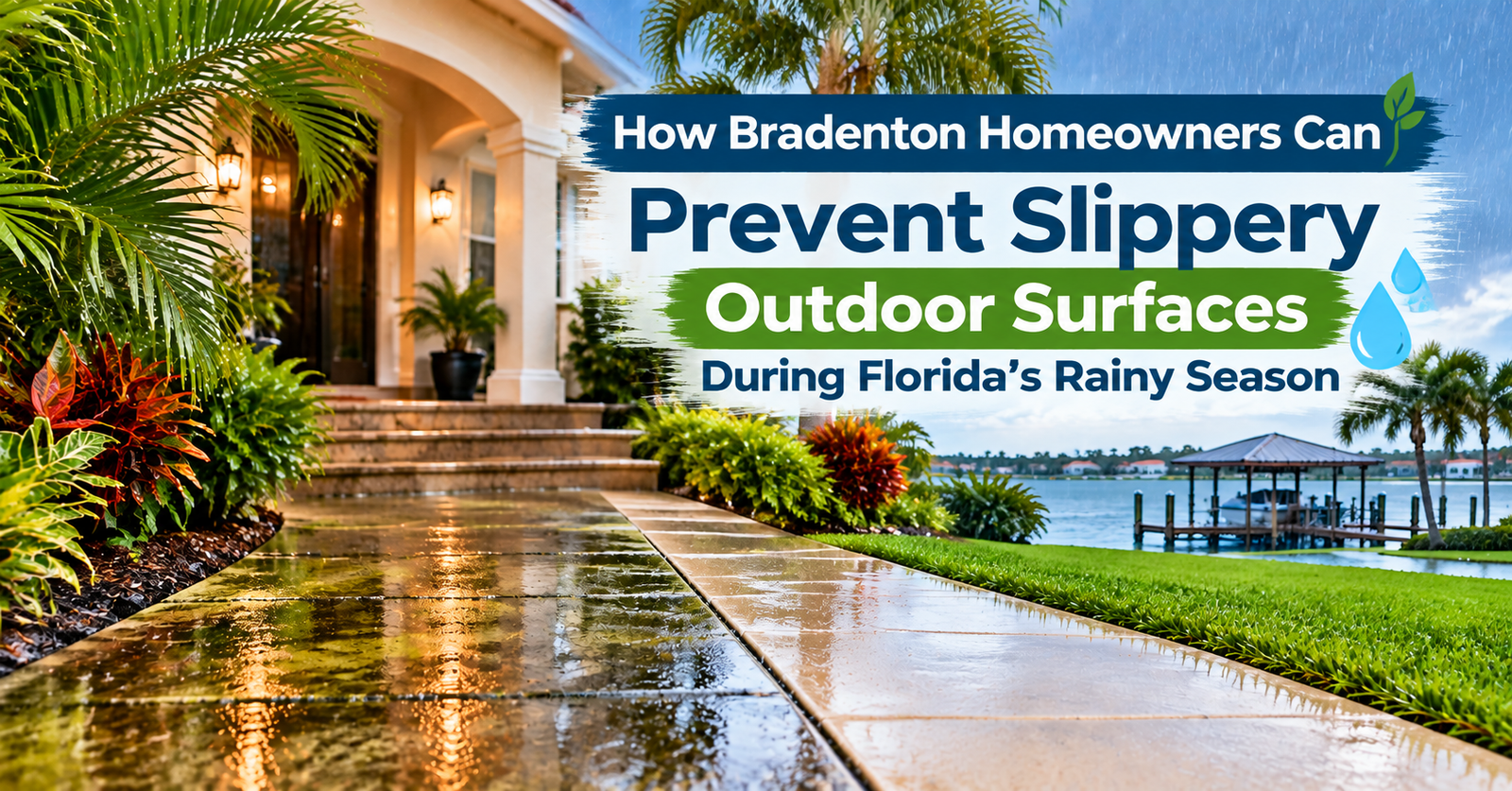
Florida’s rainy season brings warm temperatures, frequent showers, and high humidity. While the rain helps keep landscapes green, it can also create challenges around your home. Outdoor areas such as driveways, patios, pool decks, walkways, and pavers can become slippery when moisture combines with algae, mildew, dirt, and organic buildup.
For homeowners in Bradenton, this issue is especially common because the local climate creates ideal conditions for surface growth. Areas near the Manatee River, Palma Sola Bay, Lakewood Ranch neighborhoods, and shaded properties often experience longer moisture retention because of humidity, landscaping, and limited sunlight exposure. ubapressurewashing.com
Keeping these surfaces clean is not only about improving curb appeal. It also helps create safer spaces for family members, guests, and anyone walking around your property during wet weather.
Why Outdoor Surfaces Become Slippery During Florida’s Rainy Season
Many homeowners assume rain alone makes surfaces slippery. However, the bigger issue is usually what develops on the surface before the rain arrives.
Moisture allows organic growth such as algae and mildew to spread across hard surfaces. These growths can create a thin film that reduces traction when the area becomes wet. Research from the Royal Horticultural Society notes that algae and similar growths can make hard surfaces such as patios, paths, and steps slippery because they thrive in damp conditions. RHS
Common causes of slippery outdoor surfaces include:
• Algae growth
• Mildew buildup
• Mold and organic residue
• Dirt trapped inside porous concrete
• Leaves and plant debris
• Poor drainage areas
• Shaded sections that dry slowly
In Bradenton, areas that receive less direct sunlight often remain damp longer. Driveways under large trees, north-facing walls, pool areas, and covered patios are common places where buildup can develop.
How Pressure Washing Helps Reduce Slip Hazards
Professional exterior cleaning can help remove the buildup that contributes to slippery conditions.
A properly cleaned surface can remove:
• Dirt layers
• Algae films
• Mildew residue
• Organic debris
• Surface grime
For example, concrete is naturally porous. Small openings within the material can collect moisture and organic material over time, creating conditions where algae can grow. Removing this buildup helps restore a cleaner walking surface. Engineer Fix
However, cleaning methods should match the surface. A concrete driveway may require a different approach than a pool deck, paver patio, or stucco exterior.
Outdoor Areas Around Bradenton Homes That Need Extra Attention
Driveways and Walkways
Concrete driveways and sidewalks are some of the most common areas where homeowners notice slippery conditions.
These surfaces collect:
• Rainwater
• Dirt
• Vehicle residue
• Tree debris
• Algae growth
Because concrete contains small pores, organic material can become trapped below the surface. A driveway may appear only slightly dirty while still having reduced traction when wet.
Regular cleaning helps maintain safer walking paths, especially around:
• Front entrances
• Garage areas
• Sidewalk connections
• Mailbox walkways
Pool Decks and Outdoor Living Areas
Pool decks are one of the most important areas to maintain in Florida homes.
Bradenton homeowners often use outdoor spaces year-round, including patios, lanais, and pool areas. Constant moisture from rain, splashing water, and humidity can encourage algae and mildew growth.
A slippery pool deck can become a concern because these areas already have frequent water exposure.
Regular maintenance helps protect:
• Pool surroundings
• Outdoor entertaining spaces
• Steps and entry areas
• Walking paths near water features
Paver Patios and Walkways
Pavers add beauty to Florida properties, but the spaces between pavers can collect moisture, dirt, and organic material.
Common problems include:
• Green algae between joints
• Dark staining
• Moss-like growth
• Reduced traction after rain
Properties in communities around Bradenton, including areas with mature landscaping and shaded yards, may require more frequent attention because surfaces stay damp longer.
Pressure Washing vs Soft Washing: Which Method Is Better?
Not every outdoor surface should be cleaned the same way.
Pressure Washing
Pressure washing is commonly used for durable surfaces such as:
• Concrete driveways
• Sidewalks
• Some patios
• Hard outdoor surfaces
It uses controlled water pressure to remove dirt and surface buildup.
Soft Washing
Soft washing uses lower pressure combined with cleaning solutions designed to treat organic growth.
It is often better suited for:
• Stucco exteriors
• Delicate surfaces
• Areas where algae and mildew need treatment
Using excessive pressure on the wrong surface can cause damage. Consumer Reports notes that improper pressure washing can damage certain materials when the wrong technique is used. Consumer Reports
The correct approach depends on the material, condition, and type of buildup present.
Why Cleaning Only Dirt May Not Solve the Problem
One common mistake is focusing only on visible dirt.
A surface can look clean while still having a thin layer of organic growth that affects traction.
For example:
A driveway may not have heavy staining but may still become slippery after rain because algae or mildew remains within the surface texture.
Effective maintenance focuses on identifying what is making the surface unsafe, not just making it look brighter.
How Often Should Bradenton Homes Have Outdoor Surfaces Cleaned?
There is no single schedule that works for every property.
Factors that influence cleaning frequency include:
• Amount of shade
• Tree coverage
• Drainage conditions
• Rain exposure
• Pool usage
• Surface material
Homes near waterways or properties surrounded by landscaping may experience faster buildup because moisture remains on surfaces longer.
Many Florida homeowners inspect exterior surfaces before and after the rainy season to identify areas needing attention.
Simple Ways Bradenton Homeowners Can Reduce Slip Risks
Homeowners can help prevent slippery surfaces by:
Keep Areas Free From Debris
Remove:
• Fallen leaves
• Branches
• Organic waste
Organic debris holds moisture and can encourage growth.
Improve Drainage
Standing water creates an environment where algae and mildew can develop faster.
Check:
• Gutters
• Downspouts
• Low areas around patios
• Pool deck drainage
Schedule Routine Exterior Maintenance
Regular cleaning prevents heavy buildup from becoming harder to remove later.
Frequently Asked Questions
Can pressure washing prevent slippery outdoor surfaces?
Yes. Proper exterior cleaning can remove algae, mildew, dirt, and organic buildup that contribute to slippery conditions. The effectiveness depends on the surface type and the cleaning method used.
Why does my driveway become slippery after rain?
Rain activates moisture on existing buildup such as algae, mildew, dirt, and organic residue. These materials can reduce traction on concrete surfaces.
Does algae make concrete slippery?
Yes. Algae can create a thin layer on hard surfaces that becomes slick when wet. This commonly affects patios, walkways, driveways, and pool areas. RHS
Is pressure washing safe for concrete?
Concrete can often be cleaned safely when the correct equipment, pressure level, and technique are used. Improper cleaning methods may damage weaker surfaces. Suds Doctor Exterior Cleaning
What areas around a Florida home become slippery most often?
Common areas include:
• Pool decks
• Concrete walkways
• Driveways
• Patios
• Paver surfaces
• Shaded outdoor areas
Final Thoughts
Florida’s rainy season does not have to mean dealing with unsafe outdoor surfaces. For Bradenton homeowners, the key is understanding that moisture, humidity, algae, and organic buildup work together to reduce traction.
Routine exterior maintenance helps keep driveways, patios, walkways, and pool areas cleaner and safer throughout the year.
A well-maintained outdoor space improves more than appearance. It helps protect your property and creates a more comfortable environment for your family and guests.