
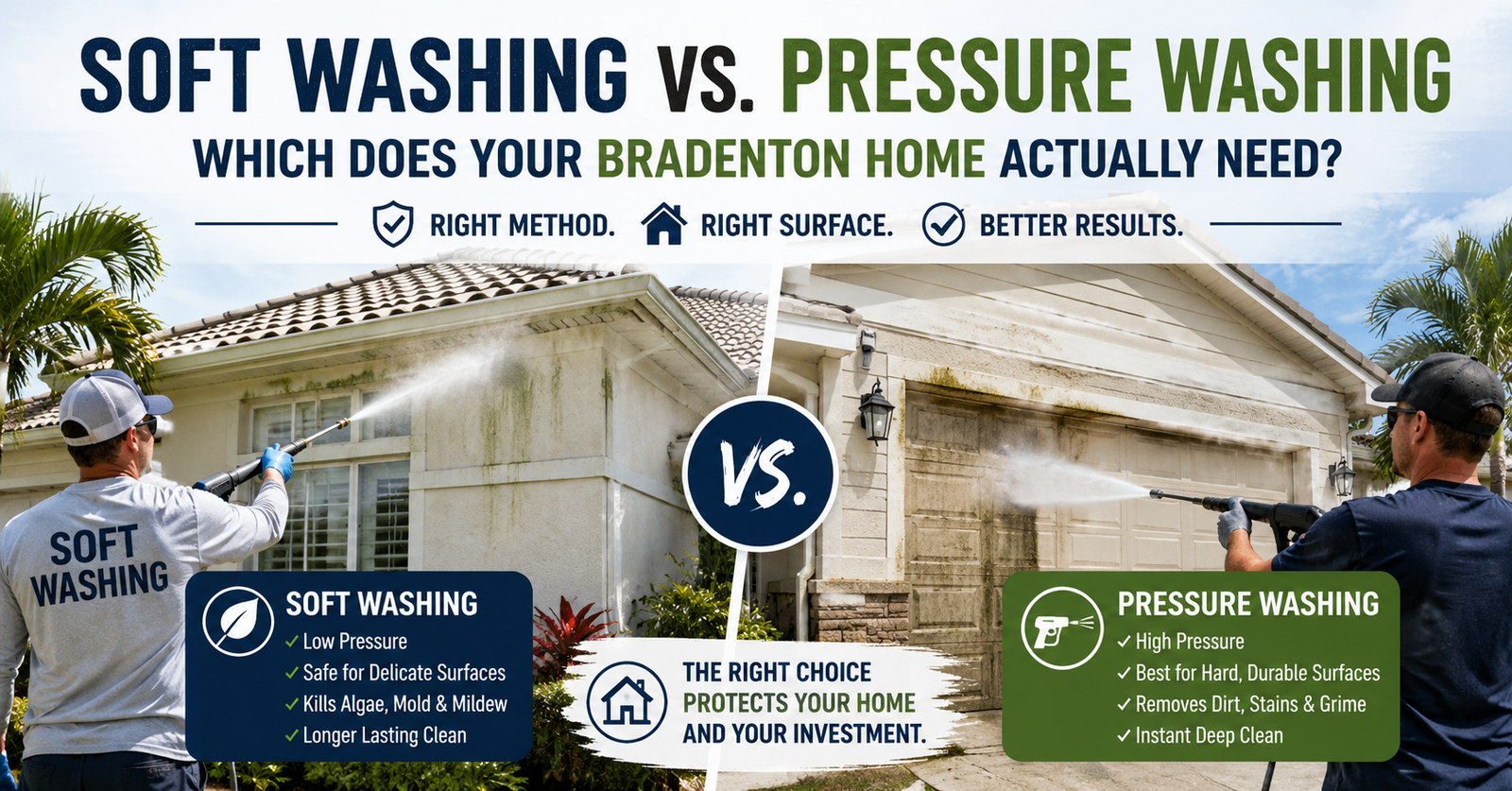
If you’ve started researching exterior cleaning for your Bradenton home, you’ve probably run into two terms that get used almost interchangeably online: pressure washing and soft washing. They sound similar, and both end with a cleaner property, but they are not the same process — and using the wrong one on the wrong surface is the single most common way homeowners end up with expensive damage instead of a clean house.
Here’s a clear breakdown of what each method actually does, which surfaces they belong on, and how to tell which one your project needs.
What Is Pressure Washing?
Pressure washing uses high-force water — often north of 3,000 PSI — to physically blast dirt, oil, grime, and buildup off a surface. There’s no chemical doing the work here; it’s raw water pressure.
This method is built for tough, non-porous surfaces that can handle the impact without breaking down:
- Concrete driveways and sidewalks
- Pavers and paver patios
- Garage floors
- Brick and masonry
- Parking lots and commercial hardscapes
On these surfaces, high pressure is actually the right tool. It strips embedded oil stains, tire marks, and ground-in dirt that a gentler method simply can’t touch.
What Is Soft Washing?
Soft washing flips the approach. Instead of relying on pressure, it uses a low-pressure rinse — typically under 100 PSI — paired with a specialized cleaning solution that breaks down algae, mold, and mildew at the root. The solution does the heavy lifting; the water just rinses it away.
This is the method for anything softer or more delicate:
- Roof shingles
- Vinyl, stucco, and painted siding
- Pool cages, lanai screens, and awnings
- Painted wood, including some deck and fence surfaces
Because there’s no forceful impact, soft washing cleans deep without cracking stucco, stripping shingle granules, or driving water behind siding panels where it doesn’t belong.
Why the Wrong Method Causes Real Damage
This isn’t just a technicality — using pressure where you should be soft washing is the leading cause of exterior cleaning damage in Florida. A few examples of what can go wrong:
- Asphalt shingle roofs: High-pressure spray can strip the granules that protect shingles from UV damage, shortening the roof’s lifespan. It’s part of why shingle manufacturers like GAF and Owens Corning warn that pressure washing can affect a roof’s warranty, and why industry groups recommend low-pressure, chemical-based cleaning for asphalt roofing instead.
- Stucco: Stucco is more brittle than it looks. Direct high pressure can crack or pit it, especially around aging or hairline-cracked sections.
- Vinyl siding: High pressure can force water behind the panels. You won’t see the problem immediately — it shows up later as mold or rot inside the wall.
- Screens and lanai enclosures: Pressure can tear pool cage or lanai screening outright.
None of this means high pressure is “bad.” It means it belongs on concrete and pavers, not on your roof or siding.
Quick Reference: What Goes With Which Method
| Surface | Recommended Method | Why |
|---|---|---|
| Driveway / sidewalk | Pressure washing | Concrete handles high pressure; needed to lift oil and tire stains |
| Pavers / patios | Pressure washing | Hard surface, but sealing afterward protects the color |
| Roof (asphalt shingle) | Soft washing | Protects granules and manufacturer warranty |
| Vinyl / stucco siding | Soft washing | Prevents cracking and water intrusion |
| Pool cage / lanai screens | Soft washing | Screening can tear under high pressure |
| Wood deck / fence | Usually soft washing | Protects the wood grain from damage |
| Garage floor | Pressure washing | Handles oil and grease stains well |
Why This Matters More in Bradenton Specifically
Bradenton’s location on the Manatee River, combined with Gulf Coast humidity and salt air, creates near-perfect conditions for algae and mold growth on roofs and siding. Much of the black streaking homeowners see on their roof is a cyanobacteria called Gloeocapsa magma, and it doesn’t just sit on the surface — it feeds on the material underneath, which is exactly why the cleaning method matters as much as the fact that you’re cleaning at all. A high-pressure blast might knock the visible staining loose temporarily, but it can damage the roof in the process while leaving the organism’s root system intact to grow back.
So Which Does Your Property Need?
A simple rule of thumb: if it’s hard and flat (concrete, pavers, brick), pressure washing is usually correct. If it’s on your roof, your walls, or anything painted or screened, soft washing is almost always the safer and more effective call.
If you’re not sure which category a specific surface falls into, that’s a normal question to have — and it’s exactly what a free estimate is for. A quick look at the property is enough to tell you the right method before any water gets turned on.
Frequently Asked Questions
Can I pressure wash my own roof to save money?
You can, but it’s risky. A standard consumer pressure washer can strip shingle granules and void your roof’s manufacturer warranty in a single pass. Soft washing requires the right dilution ratio and application technique to kill algae without damaging the shingles, which is why most homeowners leave roof cleaning to a professional crew.
How long does soft washing last compared to pressure washing?
Soft washing tends to last longer on roofs and siding because the cleaning solution kills algae and mold at the root, not just on the surface. A straight water rinse can knock loose visible growth, but if the roots survive, staining often returns within months.
Is soft washing safe for plants, pets, and landscaping?
Yes, when it’s done correctly. A professional crew pre-wets and rinses nearby plants to dilute any cleaning solution and keeps pets off surfaces until they’re dry. Point out any sensitive landscaping before the job starts so it can be worked around.
Will pressure washing wear down my driveway over time?
Not when it’s done with the right technique. Concrete and pavers are built to handle repeated high-pressure cleaning without breaking down. Damage usually comes from holding the wand too close or using excess pressure on joints and edges, not from the pressure washing itself.
Can soft washing and pressure washing be used on the same property in one visit?
Absolutely, and it’s actually the most common setup. A typical job might soft wash the roof and siding while pressure washing the driveway and walkway in the same appointment, using the method that’s correct for each surface.
Not sure which method your home needs? Get a free estimate or call (941) 418-1050 and we’ll walk you through it before we start.