
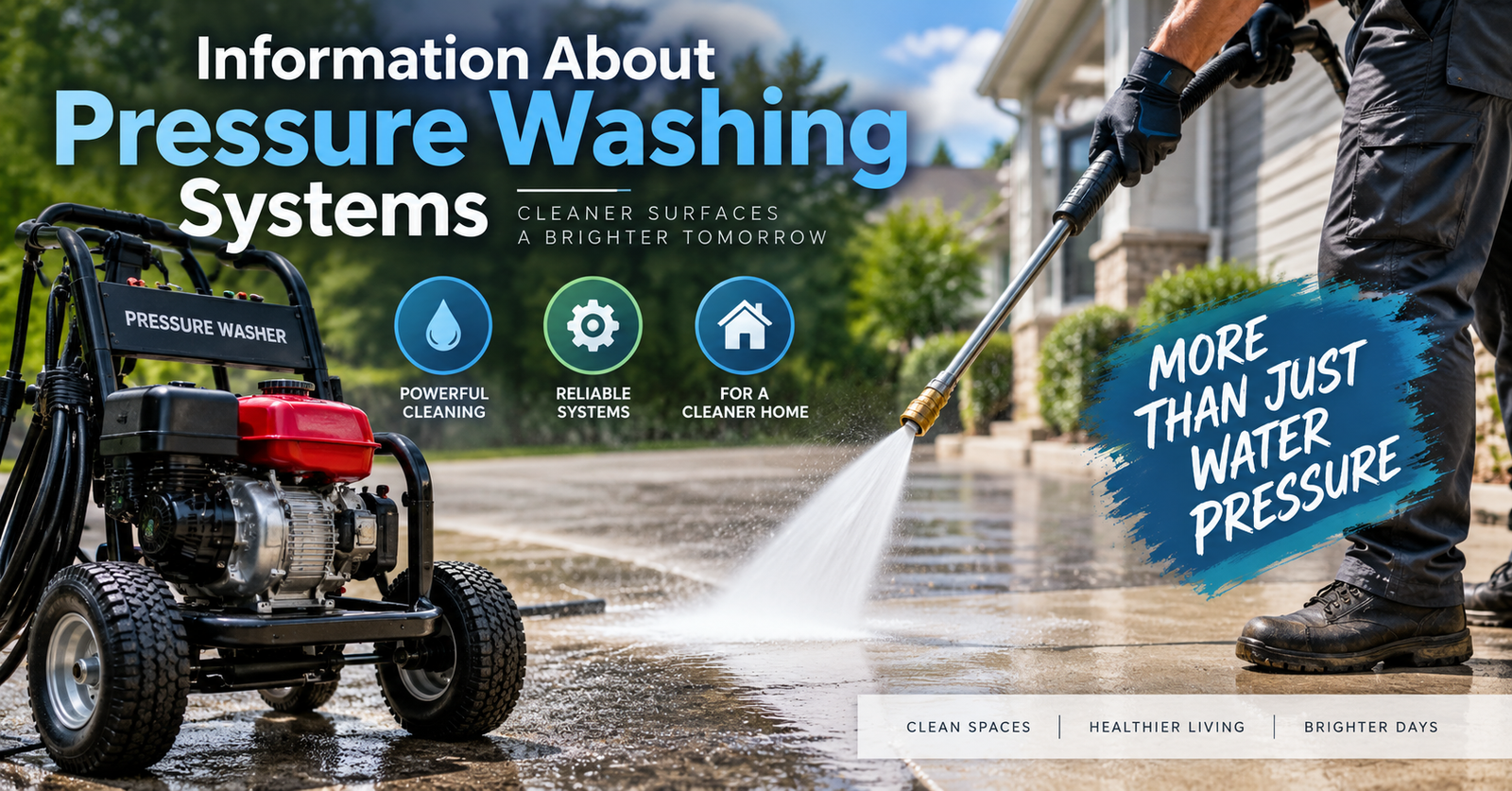
Ask five homeowners what “pressure washing” means and you’ll probably get five different mental pictures — a guy blasting a driveway with a rented machine, a truck parked outside a house with hoses running up to the roof, maybe a video of someone stripping years of grime off a patio in one pass. The truth is that pressure washing covers a wide range of equipment, water temperatures, and pressure settings, and the system behind the job matters as much as the person holding the wand. Here in Bradenton, where humidity and salt air keep algae and mildew coming back fast, knowing a bit about how these systems work explains why one method gets used on your roof and a completely different one gets used on your driveway.
What Is a Pressure Washing System?
At its core, a pressure washing system is water pulled in at a normal household flow rate and pushed back out through a pump at far higher pressure than a garden hose could ever produce. That’s the basic idea behind every unit on the market. What separates one system from another is how that pressure and volume get produced and controlled — the size of the pump, the power source running it, whether the water gets heated, and what nozzle sits on the end of the wand. A small electric unit built for a homeowner’s back patio and a truck-mounted rig a commercial crew runs all day are both technically “pressure washers,” but they’re built for different jobs, and neither is really a substitute for the other.
The Main Parts of a System
Every pressure washing setup, big or small, is built around the same handful of parts.
The pump does the actual work of raising the pressure, and it’s usually the first thing that separates a homeowner-grade unit from a contractor’s equipment — commercial pumps are rated for far more hours of continuous use before they wear out. The power source, either a gas engine or an electric motor, drives that pump. The hose and wand carry the pressurized water to wherever it’s needed, with the wand giving the operator control over aim and distance. The nozzle on the end shapes the spray pattern; a narrow tip concentrates force into a small, aggressive point, while a wide-angle tip spreads that same pressure out and softens the impact. Many professional setups also include a downstream injector, which pulls cleaning solution into the water stream so it applies along with the rinse.
Cold Water vs. Hot Water Systems
Most residential work, including the majority of what we do on Bradenton homes, runs on a cold water system. Cold water handles everyday dirt, dust, and general grime just fine, and it’s the standard setup for driveways, sidewalks, fences, and siding.
Hot water systems add a heating element, sometimes a small boiler, ahead of the pump. The added heat cuts through grease and oil faster than cold water alone, which is why hot water units show up more in commercial kitchens, auto shops, and industrial facilities than on a typical residential property. For most homes, a well-maintained cold water system paired with the right cleaning solution handles the job without the extra cost that heating equipment adds.
Gas-Powered vs. Electric Systems
Gas-powered systems run on a small combustion engine, so they’re not tied to an outlet or an extension cord. That makes them the standard choice for larger properties and commercial work, where sustained pressure and flow matter more than quiet operation. They need regular engine maintenance and run louder, but a gas unit can work through a full day without losing power.
Electric systems plug into a normal outlet, run much quieter, and need very little upkeep. They’re a solid fit for smaller jobs — patio furniture, a car, a short stretch of walkway — but they generally can’t match the pressure and flow of a gas unit over a longer job, which is why crews handling full properties almost always run gas or truck-mounted equipment instead.
Understanding PSI and GPM
Look up any pressure washer and you’ll run into two numbers right away: PSI and GPM. PSI, pounds per square inch, measures how much force the water carries when it leaves the nozzle. GPM, gallons per minute, measures how much water is actually moving through the system.
Neither number tells the full story by itself. PSI does the work of loosening dirt and breaking up buildup; GPM does the work of flushing that loosened debris away before it resettles. A system with high PSI but low GPM can lift stubborn grime but rinse slowly, while a system with strong GPM and moderate PSI often clears large areas faster, even if each burst feels less aggressive. Multiply the two together and you get what the industry sometimes calls “cleaning units,” a rough but useful way to compare one machine’s overall output against another’s.
This is part of why the right system depends on the surface. Patio furniture and screens need low pressure and modest flow. A driveway carrying years of tire marks and old oil staining can handle, and usually needs, higher PSI and enough GPM to rinse everything clean before the water dries and the dirt resettles.
Light-Duty, Mid-Range, and Commercial-Grade Equipment
Pressure washing equipment generally falls into a few tiers based on how much work it’s built to handle.
Light-duty systems, usually electric, suit occasional homeowner use on smaller surfaces. Mid-range or “prosumer” systems bridge the gap — gas-powered, stronger PSI and GPM, but still sized for one property at a time rather than back-to-back jobs. Commercial-grade systems are built for daily use across dozens of properties a week. These are the truck-mounted or trailer-mounted rigs professional crews rely on, with larger pumps, bigger fuel capacity, and parts rated for continuous operation instead of the occasional weekend project. That durability is also what makes same-day scheduling realistic, since the equipment doesn’t need the recovery time a homeowner’s unit would.
Soft Washing: A Different System Entirely
Not every job calls for high pressure at all. Soft washing uses a similar pump and hose setup but runs at a much lower PSI, relying on a specialized cleaning solution to do most of the work instead of force alone. That solution breaks down algae, mold, and mildew at the root rather than just blasting it off the top layer, which is a big reason soft washed roofs and siding tend to stay cleaner for longer than a straight high-pressure rinse would allow.
This is also the system built for delicate materials — asphalt shingles, stucco, vinyl siding, and screened enclosures — that simply can’t take a full-pressure stream without risking cracked tile, stripped granules, or water forced behind panels where it doesn’t belong. We covered exactly when each approach applies in more detail in Soft Washing vs. Pressure Washing: Which Does Your Bradenton Home Actually Need?, if you want to dig deeper into that comparison.
Matching the System to the Surface
Part of what any experienced crew does before a job starts is choose the right system for the surface, not just the right technique. A driveway or sidewalk made of concrete or pavers can take a full-pressure cold water system, often paired with a rotating surface cleaner that clears oil stains and ground-in dirt fast. A roof or a home’s siding calls for a soft wash system instead, since both are too soft to handle high pressure safely. Wood and composite decks sit somewhere in the middle, needing enough pressure to lift mildew without tearing into the grain. Gutters usually get cleared by hand rather than blasted, since the debris sits packed inside rather than spread across a flat surface. On commercial properties, the equipment scales up again — commercial pressure washing jobs often mean larger surface cleaners and higher GPM systems, with a crew working a set schedule rather than a single visit.
Why the Right System Matters More in Bradenton
Florida’s humidity, salt air, and heavy summer rain create close to ideal conditions for algae and mildew, which means picking the wrong system doesn’t just mean a weaker clean — it can genuinely damage a property. High pressure on an asphalt shingle roof can strip away the granule layer that protects it, and that same pressure on stucco can crack the surface outright. That’s a big part of why an experienced, licensed crew carries more than one system on the truck and chooses between them job by job, instead of running every surface through a single all-purpose setup.
A Few Common Questions
Can I rent a system and do this myself? For small jobs like patio furniture or a car, sure. For roofs, siding, or a large driveway, the equipment and the cleaning solution both matter, and using the wrong pressure or chemical mix is the most common cause of the surface damage crews get called out to fix afterward.
Do all pressure washing companies use the same system for everything? They shouldn’t. A company that does is usually cutting corners, not saving time.
Is a more expensive system automatically better? Not really. The right system is the one matched to the job, not the one with the highest PSI on the spec sheet.
How do I know which system my property needs? That’s really what a free estimate is for. A quick look at your surfaces tells a crew which system and method apply before any water gets turned on.
Getting the Right System for Your Property
Pressure washing systems were never meant to be one-size-fits-all, and that’s the point of this guide. The pump, the power source, the water temperature, the PSI and GPM, even the nozzle on the wand, all get chosen based on what’s actually being cleaned. If you’re weighing options for a property here in Bradenton, our team can walk you through which system fits your driveway, roof, or siding and get you a free estimate — or call us directly at (941) 418-1050.