Why Bradenton Pavers Need More Than a Quick Rinse
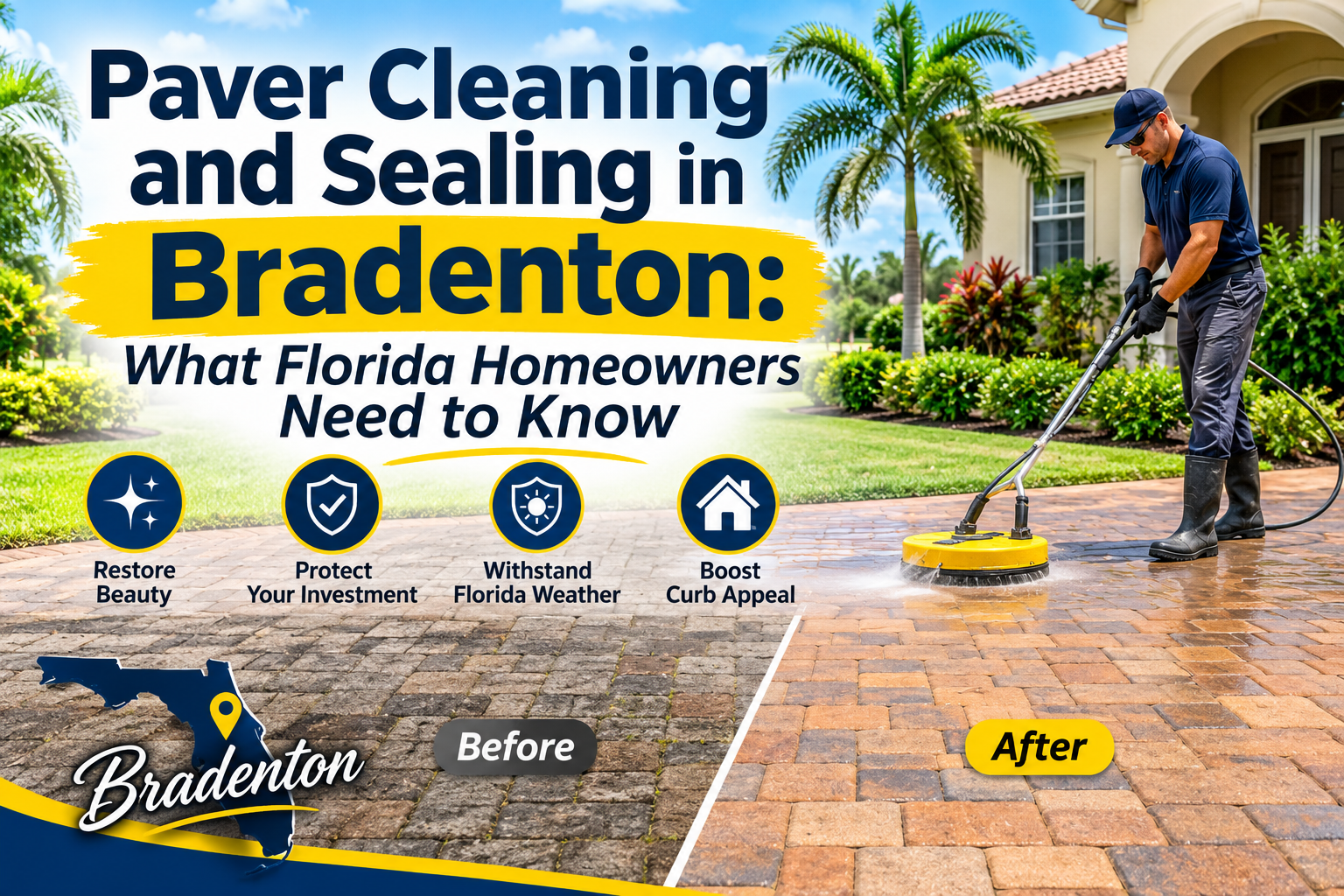
Paver cleaning and sealing in Bradenton protects your driveway, patio and pool deck from the algae, stains and fading that Florida’s heat, humidity and rain cause every year. Done in the right order, it keeps pavers looking fresh, helps lock in the joint sand, and makes future cleaning easier.
This guide explains how Florida pavers get dirty, what proper cleaning and sealing involves, how often to reseal, how to choose a finish, and what the work typically costs. It is written for homeowners with brick pavers, concrete pavers or a paver patio who want to understand the job before they call anyone.
About this guide: It is written by the team at Bradenton Bay Pressure Washing, a family-owned, licensed and insured company serving Bradenton and Manatee County since 2013. Technical guidance is based on published manufacturer advice, and the cost figures come from a named consumer cost guide that we checked on November 13, 2026.
Why Pavers Get Dirty So Fast in Bradenton
Bradenton pavers face constant moisture, which is exactly what algae, mildew and mold need. Warm temperatures, high humidity and frequent summer rain keep the surface damp, and shaded areas under trees, lanais and screened enclosures stay damp even longer.
Here is what we see most often on local brick pavers, concrete pavers and paver patios:
- Green and black growth. Algae and mildew spread across shaded, damp pavers and make them slippery. Our guide to preventing slippery outdoor surfaces in the rainy season explains why this is also a safety issue.
- Dirt, pollen and leaf stains. Organic debris sits in the joints and the surface pores, leaving tannin-type stains that a simple rinse will not lift.
- Fading and dull color. Sun exposure and foot traffic slowly change the surface color of unsealed pavers.
- Weeds and washed-out joint sand. Heavy rain can carry sand out of the joints, which lets weeds and moss take hold.
- White haze (efflorescence). This chalky film comes from naturally occurring salts in the materials and is common on newer pavers.
After a storm season the build-up is usually worse. If you are planning cleanup after the rains, our post on pressure washing after hurricane season in Bradenton covers what to tackle first.
Why Cleaning and Sealing Belong Together
Sealer locks in whatever is on the surface when it dries, so pavers must be spotless before it goes on. Manufacturer guidance is clear that a sealer traps anything left on the pavers, which means dirt, algae or stains sealed in today become permanent-looking problems tomorrow.
When the two steps are done together, the benefits add up:
- Protection from stains and moisture. Sealing helps guard against water damage, staining, fading and seasonal wear.
- Better color. A sealer can bring out the natural color of the pavers, from a natural matte look to a deeper wet look.
- Stabilized joints. Sealing after the joint sand has cured helps hold the sand in place and resists washout.
- Easier maintenance. Sealed surfaces are typically easier to keep clean with soap, water and a broom.
One honest note: sealing is largely about appearance and ease of upkeep, not a structural requirement. Some manufacturers describe it as an optional step, and some pavers come pre-sealed from the factory. If you like the look of your pavers as they are, cleaning alone may be enough. If you want richer color, stain resistance and fewer weeds, cleaning and sealing together is the better investment.
How Professional Paver Cleaning and Sealing Works
A proper job follows a set order, and the waiting time between steps matters as much as the work itself. This sequence matches the preparation steps in Unilock’s guide to sealing pavers, adapted to how we approach local patios, driveways and pool decks.
- Inspect the surface. Check for settled or shifted pavers, low joint sand, old sealer and efflorescence. New pavers should wait 60 to 90 days before their first sealing so the white haze can clear.
- Remove weeds and treat stains. Weeds and moss come out with narrow tools, not a wire brush, which can scratch the surface and leave metal particles that later show up as rust. Oil and grease get a dedicated paver cleaner.
- Wash with controlled pressure. High pressure can damage the paver surface and blow sand out of the joints. A fanned nozzle held at an angle and kept about 12 inches from the surface is the safer approach. If you want to understand when a gentler method is the right call, read our comparison of soft washing vs. pressure washing.
- Refill the joints. Any sand lost during washing is replaced, and polymeric sand is given time to cure before sealing.
- Let the pavers dry completely. In warm, sunny conditions this can take a few hours. In cooler, shaded areas, plan on about 24 hours.
- Apply the sealer evenly. A sprayer or short-nap roller gives a uniform coat. The job should be finished in one go, because overlapping coats can leave gloss differences, and overspray cannot be washed off once it dries.
- Cure. Keep foot traffic, vehicles and sprinklers off the surface. Allow up to 48 hours of dry weather for the sealer to cure properly.
If you want to see how this fits into our wider service, our paver sealing service in Bradenton page explains what we offer, and our driveway and sidewalk cleaning service covers the surrounding concrete.
Brick Pavers vs. Concrete Pavers: What Changes
Both materials are porous, so both benefit from cleaning and sealing, but the sealer choice differs. Whether you search for brick paver cleaning and sealing, patio paver cleaning and sealing or paver patio cleaning and sealing, the surface underneath is usually one of these two.
Concrete pavers need a breathable sealer that lets moisture escape. This helps prevent trapped moisture, efflorescence and cloudy haze under the finish.
Brick pavers tend to absorb more than concrete, so choosing the right sealer matters even more. Many brick installations look best with a matte or low-gloss finish that protects against staining while keeping the natural appearance. Shaded brick areas also dry more slowly, which affects how long you wait before sealing.
Pool decks and patios deserve extra thought. High-gloss sealers can become slippery when wet, so a matte or natural finish is the safer choice where bare feet and water meet. If you also maintain a screened enclosure, our pool cage and lanai cleaning service pairs well with a paver refresh.
If you are not sure what material you have, or whether the pavers were sealed before, ask the installer or have a professional test a small area first. Old and new sealers can be incompatible, so testing before resealing avoids costly mistakes.
How Often to Reseal in Florida and Which Finish to Choose
Most manufacturers and cost guides put the reseal interval at three to five years. That is a general range, and local conditions can pull it toward the shorter end. Heavy foot or vehicle traffic, strong sun, high humidity, frequent rain and leaf-dropping trees all wear a sealer down faster.
Signs your pavers are ready for a fresh coat:
- Water soaks in instead of beading on the surface
- The color looks dull or uneven
- Stains and algae return quickly after cleaning
- Weeds and moss reappear in the joints
- Joint sand keeps washing out
Water-based or solvent-based? Water-based sealers are breathable, penetrate the pavers, help stabilize joint sand and give a more natural look. Solvent-based sealers give a higher shine and tend to last longer, but they are not breathable, so trapped moisture can cause a white haze, and the pavers must be completely dry before application. Either way, a professional can match the product to your paver type and shade conditions.
Natural, matte or wet look? A natural or matte finish is the safest choice for walkways, pool decks and patios because it is less slippery. A wet look deepens the color but can be slick when wet.
Pick the right weather window. Sealing needs dry conditions, with clear skies for 24 to 48 hours before application and temperatures between roughly 50 and 90 degrees Fahrenheit. In Bradenton, the drier months from late fall through spring usually make those windows easier to find than the summer rainy season.
DIY or Hire a Professional?
DIY can work for a small, flat area if you are comfortable with the process, but mistakes are easy to make and hard to undo. The most common problems are:
- Pressure set too high, which scars the surface or blows out the joint sand
- Sealing before the pavers are fully dry, which can cause haze or peeling
- Uneven application, which leaves lap marks and gloss differences
- Overspray on walls, windows or landscaping, since sealer does not wash off once it dries
- Applying new sealer over an incompatible old one
Solvent-based sealers also release strong fumes, so a respirator and good ventilation are essential.
A professional brings the right equipment, knows how to match the sealer to the paver, and can fix joint sand and minor issues before the coating goes on. When you collect quotes, ask whether cleaning, joint sand and sealing are all included, which sealer type will be used, how long it must cure, and whether there is a warranty. Get the estimate in writing. Our article on how to choose a pressure washing company in Bradenton walks through what to check before you hire.
What Paver Cleaning and Sealing Typically Costs
Published averages put a full clean, joint-sand and seal job at $1.50 to $3.25 per square foot, according to HomeGuide’s paver sealing cost guide. That range includes pressure washing, filling the joints with paver sand and applying the sealer. These are national averages, not a Bradenton quote, so local prices can differ.
Price per square foot drops as the job gets bigger:
- Under 500 square feet (a small patio or walkway): $2.20 to $3.25 per square foot
- 501 to 2,000 square feet: $1.75 to $2.95 per square foot
- Over 2,000 square feet: $1.50 to $2.20 per square foot
For a sense of totals, the same guide lists about $550 to $820 for 250 square feet, $875 to $1,475 for 500 square feet, and $1,750 to $2,950 for 1,000 square feet. If the pavers only need washing, the guide puts cleaning alone at $0.35 to $0.80 per square foot.
What moves your price up or down:
- Condition of the pavers. Heavy stains, algae or efflorescence take more prep.
- Repairs. Releveling, replacing cracked pavers or fixing drainage is not included in a standard sealing price.
- Access and slope. Sloped or hard-to-reach areas can cost more.
- Moving furniture. Clearing grills, planters and patio sets adds labor.
- Minimum fees. Small walkways and patios often cost more per square foot because many companies charge a minimum job fee.
For general pricing across our other services, see how much pressure washing costs in Bradenton. The most reliable number for your own pavers comes from a written, itemized estimate after someone has looked at the surface.
Frequently Asked Questions
How long should I wait to seal brand-new pavers? Wait 60 to 90 days after installation. Sealing too early can trap moisture and cause efflorescence.
How long does paver sealer last? Usually three to five years, depending on the sealer, traffic, sun, humidity and tree debris.
Is sealing pavers really necessary? Not strictly. It is mainly about color, stain protection and easier cleaning. Many homeowners find it worthwhile for pool decks, driveways and patios that see heavy use.
How soon can I walk or drive on freshly sealed pavers? Water-based sealers generally need 24 to 48 hours before light foot traffic, and solvent-based products can need up to 72 hours. Always follow the product’s data sheet, and keep sprinklers off while it cures.
Can I seal over old sealer? Only after testing. Old and new sealers can be incompatible, so a small test area is the safest first step.
Does sealing make pavers slippery? High-gloss finishes can, especially when wet. A natural or matte finish is the better choice near pools and on walkways.
Ready to Refresh Your Pavers?
Paver cleaning and sealing in Bradenton works best when the surface is properly prepared, fully dry and sealed with a product that suits your pavers and your shade and sun conditions. Whether you have brick pavers, concrete pavers or a paver patio, the right order of steps protects the look and the safety of your outdoor space.
Bradenton Bay Pressure Washing is a family-owned, licensed and insured company that has served Bradenton and Manatee County since 2013. To talk through your pavers or ask for a free estimate, call (941) 418-1050 or use our contact page.